Jim Connolly Marketing

  • Home
  • About
    • About Jim Connolly
    • Jim’s small business marketing newsletter
    • Top Marketing Tips for 2026
    • Privacy Policy
    • How I use cookies
    • Contact
    • Disclosure
  • Let’s Grow Your Business

When the vision pulls you, you don’t have to be pushed

By Jim Connolly | July 1, 2020

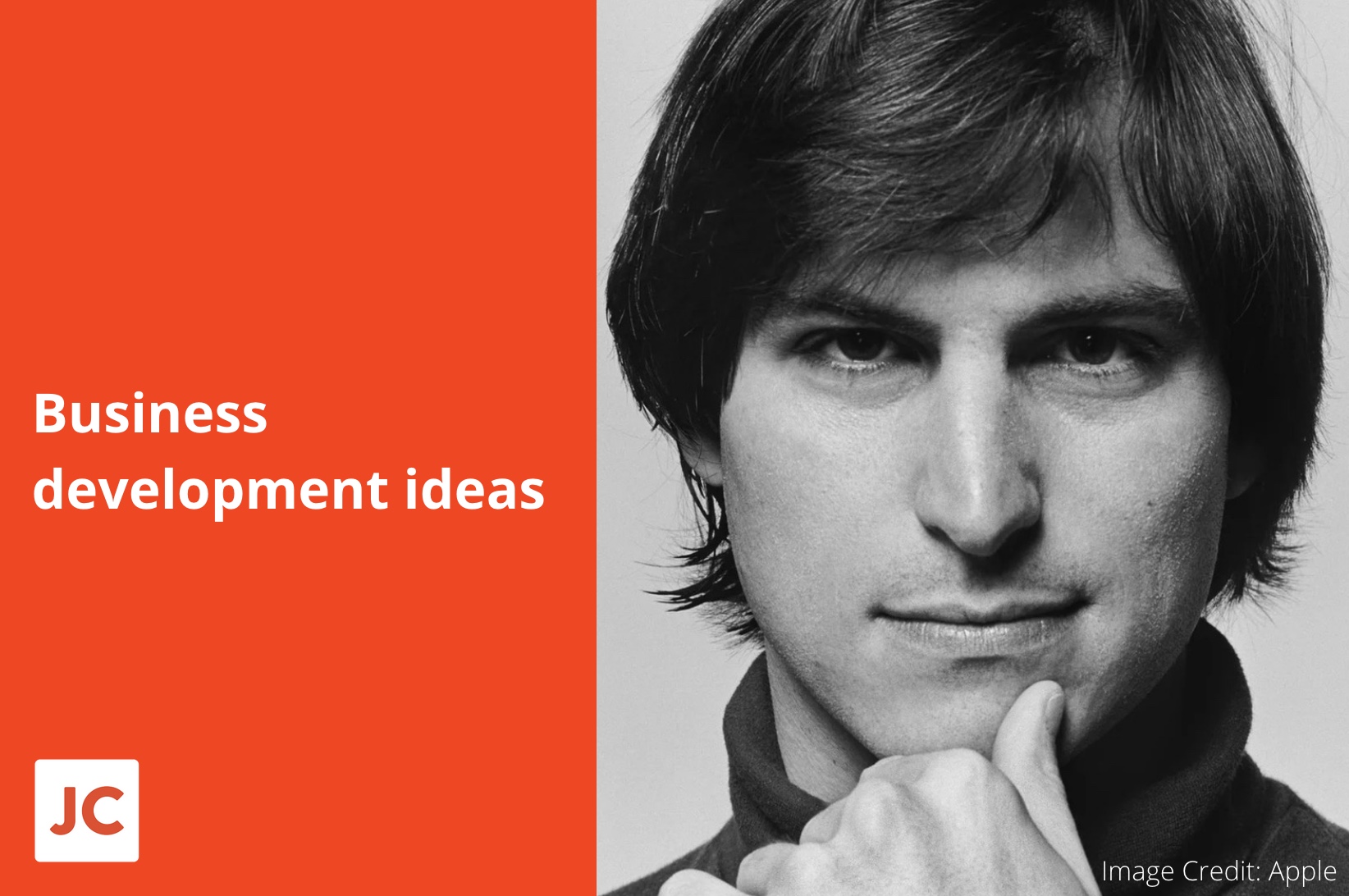
when vision pulls, don't need pushed, Steve Jobs vision

One of the most common questions people ask me, is in relation to blogging. Specifically, they want to know how I manage to push myself, to write and publish content as often as I do.

Here’s the answer.

Push or pull?

This quote from the late Steve Jobs answers that question beautifully:

If you are working on something exciting that you really care about, you don’t have to be pushed. The vision pulls you.

– Steve Jobs.

If your vision of blogging is that it’s a necessary evil, you will fail on every metric.

  • You will fail to write as well as you can, because when you work through gritted teeth, it shows.
  • You will fail to show up with new information, often enough.
  • You will fail to engage people.

My blogging vision was different

I saw it as a professional and personal development opportunity. I knew that in order for me to share useful information regularly, I needed to feed my mind with useful information regularly. I quickly found another massive benefit to blogging, which is that writing regularly makes you a better communicator. That’s a huge asset for anyone.

So, even if I failed to attract a commercially valuable reader community, I’d still benefit. Firstly, I’d become far more informed. Secondly, I’d be better able to communicate my ideas than I would have been, had I not written all that content. This made it impossible for me to fail.

If you’re struggling to publish content regularly enough, don’t carry on working through gritted teeth. Change your vision. And then let that vision pull you.

Thankfully, Jobs’ concept works in every area of your life and isn’t limited to content creation.

Tip: If you found this useful, you can get my latest ideas delivered direct to your inbox, for free, right here.


How to get the best, free marketing advice

By Jim Connolly | June 22, 2020

marketing research

Photo: Shutterstock.

There’s a lot of free marketing advice available online. Some is good. Sadly, most is ineffective. Today, I want to help you identify the best marketing advice and show you how to avoid the worst.

A new client with a familiar problem

I was prompted to write this after my initial session with a new client. I went through some questions with her, as I do with all my new clients. I quickly noticed that she was making a number of serious marketing mistakes. During our session, I asked her where she got those marketing ideas from and she named around half a dozen marketing sites.

I soon figured out what had happened.

Today, I want to help you avoid making the same, expensive mistake. I need to start by drawing your attention to 2 types of marketing blogger.

1. The marketing blogger, who doesn’t have a business

Many marketing blogs are written by people who are career employees, paid to produce lots of content. Others are employees, who were previously entrepreneurs, but they failed to build their own business and are now paid to produce “content” for their employers.

Think about that for a moment: On sites like these, you’re taking marketing advice from someone, who has either never marketed their own business or whose own business failed.

2. Guest bloggers on popular marketing blogs

The vast majority of top marketing blogs rely very heavily on unpaid, guest bloggers. Guest bloggers are people who write for free, in return for access to a popular blog’s readership.

None of the guest bloggers I checked on the sites my client mentioned, had the assets you’d expect from a competent marketer. In other words, they were unable to market their own brand.

Think about that for a moment: Their readers are taking marketing advice from bloggers, who feel forced to work for free. Bloggers who still haven’t figured out how to grow their own valuable readership, community or tribe. Bloggers who still have no idea how to market their own brand, other than by guest blogging. Taking advice from them lost my new client a fortune.

Check the source

No, not every employee / guest blogger who writes about marketing is clueless. Some will be knowledgeable. At least a little.

My point is simply this: Always check the credentials of those offering free marketing advice, before you act on what they tell you.

They should have an about page on their site, (like this one). See if they’ve achieved what you need to achieve. See if they have a proven track record at the highest level. If not, then find a better source.

Well-written and sincere

Lots of bloggers write extremely well and make a compelling point, when what they’re telling you is incorrect or ineffective. They may be sincere, but it’s possible to be sincerely wrong.

I estimate my new client has lost at least 5 years worth of business growth. And probably missed out on hundreds of thousands of dollars in revenues. All because she followed the same, ineffective marketing advice as thousands of other small business owners.

Don’t let it happen to you.

Before you invest your time or money on marketing, check the source.

Always, always check the source.

Agility is the new growth

By Jim Connolly | May 6, 2020

marketing, agile growth

Photo: Shutterstock.

Since the start of the pandemic, I’ve written a lot about the need for business owners to adopt agile thinking. So it may come as a surprise that the title of today’s post is taken from Matthieu Pellerin, the founder and head of Google’s Growth Lab.

Pellerin wrote a very interesting post yesterday, Inside Google Marketing: Agility is the new growth. In it, he generously shares what he’s seeing, regarding changes required when marketing during the coronavirus pandemic. I found the following quote especially interesting:

“Our raison d’être continues to be driving responsible and sustainable growth, but we’re now operating under a new mantra of ‘organisational agility’.”

Whilst his post focuses on what his team at Google are doing, there’s clearly a core message we can all benefit from.

The needs, wants and situation of your clients and prospective clients is changing rapidly. In some cases, daily. Your marketing messaging needs to be just as agile, if you want to be as useful, valuable and relevant to them as possible. This includes your email marketing, website content, blog posts, social networking updates and vlogging, etc.

You simply cannot expect a pre-pandemic marketing message to strike the correct tone. Pellerin gives an example of just how important he believes it is, to get agile and move fast:

“We readjust these plans regularly and continue to switch resources as needed. Our key product priorities are shifting at lightning speed”.

Next steps

If, like many people reading this, you’re getting fewer sales or new client enquiries, check the messaging you’re using. If it fails to address the new and evolving priorities of your marketplace, it will also fail to deliver the results you need.

Whenever possible, hire a professional marketing copywriter to create compelling, relevant content for you. If that’s not within your budget, do something yourself. And in either case, review the message at least every 7 days. Sooner if it isn’t generating the results you need.

Yes, this means spending more time on your marketing. However, an agile situation demands an equally agile response.

Front of mind?

By Jim Connolly | April 11, 2020

front of mind, what is

Photo: Shutterstock.

So, what does front of mind mean? In this article I’ll explain the meaning and also provide you with some powerful examples we have all been very aware of.

Since the start of last year, many of the companies, organizations and brands that were front of mind (sometimes called top of mind), have now been replaced. The 2020 coronavirus pandemic changed everything and we saw different brands respond very differently with their marketing. It was a great example of what front of mind means, and how it works.

What does “Front of mind” mean?

It’s generally used to describe the first person or brand that comes to mind, when someone thinks about a topic. For example, if I ask you to give me the name of a social network and you reply with “Facebook”, then Facebook is currently front of mind for you, among social networking brands.

One of your key marketing tasks as a business owner, is to occupy the front of mind position in your marketplace. When they need whatever you provide or need help from someone in your industry, your name needs to pop into their mind first.

If they think of 2 or 3 competitors before you, you’re way less likely to get an enquiry.

A recent example of how front of mind works, and can change, came from the way businesses responded to the coronavirus. Their reaction fit into one of the following three groups.

1. Some carried on as if nothing had happened

They were unsure what to do, so they just did what they’d always done. This made them utterly irrelevant to the new needs and wants of their marketplace. They quickly faded in prominence, in the mind of their existing clients – – let alone the minds of those who would have been their future clients.

2. Some made an announcement, then went quiet

This group saw other providers making a statement about COVID-19, so they did the same. They then reverted back as if it was business as usual, like those in the previous group. And they too saw their businesses or brands fade in the mind of their marketplace.

3. Some adapted to the challenges of the coronavirus

This group increased the relevance and frequency of their marketing messaging. They looked at the new needs and new wants of their marketplace and adapted accordingly.

Interestingly, this group included the largest of corporations and the smallest of small businesses.

For example.

  • Coca Cola started to use their Twitter account exclusively to share coronavirus advice and promote charities, to over 3 million followers.
  • I live in a small village where a local taxi driver switched his business, to exclusively focus on delivering shopping, hot food, medicines and other supplies to high-risk people. He’s now the best known taxi driver in the area and has an army of super loyal customers.
  • In the marketplace they serve, those 2 very different businesses became front of mind.

Businesses in that 3rd group were keenly seeking out ways to proactively connect with, and be helpful to, the community they served. They used social networks, newsletters, blogs, vlogs or podcasts etc., to share useful, relevant information and they thrived as a result.

And they naturally became front of mind!

front of mind, what does front of mind mean

The situation in 2020 / 2021 saw lots of new brands become front of mind, and many have managed to retain the position. The key is to remember that there are opportunities in every economy, and under every kind of service conditions, to take our businesses to the front of our marketplace’s mind.

Marketing has changed. Have you?

By Jim Connolly | July 29, 2019

marketing change

Before social media became mainstream, marketing was all about what you said.

Today, marketing is all about the way you operate. That’s because the service you provide, and the promises you keep, create a story. And in a connected world, the providers with the best stories win. They get the referrals, the word of mouth recommendations, the free publicity and the repeat clients.

If you’re attracting too few clients or making too few sales, don’t just improve your message.

Instead, look for meaningful ways to improve what you do. Because when you give your marketplace a story worth sharing, they’ll share it.

Marketing tip: Press pause!

By Jim Connolly | March 19, 2019

I want you to think about the following for a moment:

  • The last tweet you sent.
  • The last newsletter you published.
  • The last Linkedin post you shared.
  • The last Facebook update you posted.

Each of those actions could easily be a prospective customer’s first exposure to you (and your business). If so, it will help form their first impression of you.

Here’s the thing. First impressions count.

  • First impressions count, even if you are having a bad day.
  • First impressions count, even if they are inaccurate.
  • And first impressions count, because if you screw it up, you often won’t get a second chance!

So, what’s the solution?

Well, here’s something that can certainly help you.

Drum roll please…

Pause…

It pays to pause for a few moments before you publish ANYTHING. That’s because most of what you publish is easy to find via search engines or the social networks you use. And we know that the vast majority of people now check providers out, before deciding to hire them or buy from them.

Think about the wider, longer-term implications of what you are saying. Never underestimate the impact of an angry tweet, a needy Linkedin post or a spammy Facebook update, etc.

Once it’s published, it’s out there. It’s in play. It’s carrying your name. And it’s carving your reputation.

Tip: Read this » How To Build a World Class Reputation.

  • « Previous Page
  • 1
  • …
  • 6
  • 7
  • 8
  • 9
  • 10
  • …
  • 60
  • Next Page »

Creative Marketing Tips

Get my best ideas delivered direct to your inbox. Just add your email below.

You can unsubscribe at any time. I respect your privacy.

Jim Connolly

Hi! I'm Jim Connolly and I use creative marketing to help small business owners increase sales, boost profits and build amazing businesses. Read more here.

Featured by

marketing advice, marketing help

Categories

  • AI (7)
  • Blogging (407)
  • Business development (493)
  • Copywriting (307)
  • Creative Marketing (1,668)
  • Email marketing & mail shots (187)
  • Professional development (545)
  • Social media marketing (358)

Hosting provider

20i hosting

Search

Recent posts

  • Sign your work. Grow your business August 17, 2026
  • Get creative: Let others market your business for free! August 7, 2026
  • Traditional marketing is dead July 27, 2026
  • The stupid game July 13, 2026
  • Hey! Not so fast! July 6, 2026
  • How to get your fees right June 23, 2026
  • A 3 shot espresso for your business June 17, 2026
  • Unproductive? You’re probably just bored June 12, 2026
  • Make AI grow your business June 8, 2026
  • It motivates people to take action, now June 4, 2026
  • Is your business one of the 50% that prospects now avoid? Probably! May 30, 2026
  • Give your best ideas away for free. Here’s why May 12, 2026
  • AI is wiping out your competitors. Now take their market share May 5, 2026
  • Powerful words for your marketing toolbox. Part 2 April 29, 2026
  • Your social media is sending an important message April 27, 2026
  • When was the last time? April 23, 2026
  • Jim, why are my sales numbers down? April 20, 2026
  • The secret sauce you were looking for, is here April 15, 2026
  • A few things worth learning, from the top small businesses April 9, 2026
  • Be optimistic. Because all this is true April 2, 2026

Creative Thinking?

My Creative Thinking Website
  • Home
  • About
  • Let’s Grow Your Business

Copyright © 2026 Jim Connolly