Jim Connolly Marketing

  • Home
  • About
    • About Jim Connolly
    • Jim’s small business marketing newsletter
    • Top Marketing Tips for 2026
    • Privacy Policy
    • How I use cookies
    • Contact
    • Disclosure
  • Let’s Grow Your Business

Publish the process: Field Offices

By Jim Connolly | October 21, 2021

field offices, change scenery,

In the early days of the blog, I’d often share a look behind the scenes at my working day. It’s something I call publishing the process and today it’s back!

Just as before, I’ll share ideas I’m working on, the tools I’m using, useful new resources, the way I collect ideas… as well as things like sources of inspiration, etc.

Let’s kick things off with: Field offices

Lots of readers have asked me about how and why I use field offices. It’s something I’ve mentioned in passing in recent blog posts and newsletter articles. But never in any detail.

It’s a relevant topic to start with, as I sit in a field office right now; sipping espresso, with my MacBook Air finally connected to the coffee shop’s WiFi.

“[…] We get into ruts at work by following strict routines. That’s the problem! […]”

Dr. Todd Dewett

How many times have you had a great idea or flash of insight, when you’re in the shower, or when you’re at the gym or stuck in traffic?

It happens to all of us and it happens a lot.

One reason for this is that the change of scenery disrupts your routine and provides you with multiple, different inputs. Fresh sources of stimulation. And each of these influences how we think and feel, to a lesser or greater degree.

Like thousands of others, I’ve found that the same thing happens when I deliberately choose to break the routine of working from a non-traditional working environment.

Field offices offer 2 major benefits

  1. Field offices provide you with the same valuable, fresh / different ideas and insights, that often come randomly in the shower. However, by deciding to deliberately kick-start the process, you have far greater control over when it happens.
  2. Because you’re equipped with the tools you work with, for me it’s a laptop or a notebook and pen, you can capture the idea or insight and instantly get to work on it.

I also find it helps to use multiple different locations and settings. Here are the ones I’ve used recently.

  • A bench on the Chesterfield Canal.
  • A coffee shop (in the above photo).
  • The grounds of Lincoln Castle and also Conisbrough Castle.
  • My garden.
  • Sherwood Forest.

As with anything like this, some people will find it extremely useful, others will find it a lot less useful. I strongly recommend you, at least, to give it a try. See it it helps and how it helps.

How it helps?

Yes.

Field offices work in different ways for different people.

I find that they’re of most use to me when I’m stuck with an idea. Other people I know, find field offices most useful when writing reports. Whilst others, still, use them exclusively when they’ve spent too many days at a desk, and feel they ‘just need’ a change of scenery.

I hope you found this look at field offices useful. Moreover, I hope it inspires you to give it a try the next time you’re looking for a creativity boost.


Content marketing: It’s all about pressing the publish button

By Jim Connolly | September 4, 2021

marketing

Image: Danielle MacInnes. 

Hannah just emailed me with a question. She wants to know what’s the secret to publishing content marketing more frequently. Here’s my reply.

There are lots of reasons for not publishing more of our ideas, to more people, more often.

  • I just can’t think of anything useful to say right now.
  • Maybe no one will bother reading it.
  • I know what I want to say, but I can’t figure out how I want to say it.
  • This needs to be really, really good and I’m not sure I can write something of that quality today.
  • I don’t have enough time.

Those are totally valid reasons. I know because I’ve experienced all of them more than once over the years. However, I don’t think they address the primary reason why so few people, regularly create and publish their own content marketing.

In my experience, as someone who has mentored hundreds of people on content creation and delivery, the main barrier is pressing the publish button. Moreover, their concern regarding the response they might face, after publication. The fallout, criticism and possible confrontation.

It’s certainly true that if we choose to publish nothing, we don’t need to worry about unleashing a wall of potentially hostile responses.

It’s also true that we miss out on all the opportunities that could come our way, if we were to press publish and share our ideas or observations.

But tragically, by failing to press the publish button regularly, we never learn how other people manage to publish regularly.

Here’s the thing. By repeatedly pressing the publish button, we become perfectly, totally comfortable, publishing our original content whenever we have something useful to share.

Here’s an example of what I mean.

  • My first blog post took several days to write, edit, re-edit, format, re-edit… then publish.
  • This post was written on my phone and published on WordPress in around 15-20 minutes.

What was the difference between the two posts?

The experience I gained, from pressing the publish button several thousand times.

Google indexing scraped content from my blog: Part 2

By Jim Connolly | September 2, 2021

Image: Mitchell Luo

My recent problem with stolen content seems, for now, to have stopped. No, Google hasn’t stopped the crooks from scraping my blog, or the dozens of other sites these people attack daily. Google hasn’t even responded to my request for help. And the scraper’s sites are still packed with freshly stolen work.

Just not mine. For now, at least.

In case you missed the previous post, the reason these particular scrapers are such a problem, is they’re able to steal my work, AND get it submitted for indexing by Google in seconds.

Their scraped copy of my work was then selected by Google as canonical (the original version). My original work was regarded as a copy and wasn’t indexed. This means it can’t appear in Google Search Results.

Scraping my content by RSS feed

It’s a bit drastic, but I’ve had to remove my RSS feed, which the criminals use to steal my copyright protected posts, publish them on their sites and stuff them with ads (yes, Google Ads).

There’s a big downside though. Without an RSS feed, there’s no easy way for people to subscribe to this blog via feed reading services like Flipboard or Apple News.

I tried several less severe alternatives, but these people use very sophisticated software, which bypassed all the solutions the various experts I spoke with were able to suggest.

Google indexing scraped content is a huge issue, which very few victims (original content producers) are even aware of. They certainly see that they get way less organic search traffic from Google.

But most will have no idea why. They won’t know that none of the content they’ve written (since they were scraped using this ultra effective scraping software) can appear on Google Search.

Content scraping is easy money

Google pretty much owns search. So there’s little or no motivation on their part to finally start taking content scraping seriously. The problem has been here for over a decade.

Yes, Google asks people not to scrape sites. But Google do very, very little to proactively stop ranking the stolen work. The processes involved in reporting stolen / scraped content is, at best, arduous; especially when there’s a lot of content to report. And even if successful, Google will not ban the scraping site. You have to keep on filling in forms… which is why many victims simply give up.

Whilst there’s little motivation for content producers to keep on reporting the criminals, the content thieves have huge motivation to carry on. They can set up a site, pack it with scraped content and Google Ads, and literally make money automatically. They don’t have to do anything once it’s set up, other than watch the advertising revenue flow into their bank accounts. Easy money is an understatement.

The huge Google problem, which they don’t give a rat’s ass about

By Jim Connolly | August 29, 2021

Goolge content theft, crooks

Image: Pawel Czerwinski  

This brief post is unlikely to be indexed by Google. Although it’s written for humans (like you), it’s value will be determined by Google’s famously incompetent bot. The bot needs a minimum of three hundred words in order to get a handle on what the topic is.

That’s why lots of blog posts and articles read so poorly. They’re deliberately written over-long. The author is playing the Google game. If they want search traffic, they have to add unnecessary fluff. They also need to keep repeating certain words and phrases, or Google’s bot won’t know what to rank them for.

Google’s stolen content problem

The Google game is like most games. The vast majority play by the rules. Others don’t.

My posts are stolen by criminals within minutes (sometimes seconds) of publication. They use software to publish them and submit them to Google’s index.

In many cases, their illegal copy of my copyright protected work is chosen by Google as the original ‘canonical’ version. My original is then seen as a copy. I could even be penalized by Google, for Google’s own mistake. There’s no workable recourse. The bad guy wins.

Google search is broken. And for the foreseeable future it will stay like that. They’ve trained writers how to write for their extremely limited Google bot. The bad guys know how to profit on autopilot. It costs Google nothing. So, there’s no motivation for them to put their house in order.

When an service is as huge as Google, it’s beyond reproach. Yes, if a major publication complains, Google takes immediate action. The rest of us need to live with it. We need to play the Google game and accept theft of our work. That really sucks, but they’re Google… so!

BTW: This was 299 words.

Here’s an update: Google indexing scraped content from my blog: Part 2

How to get free access to the world’s best marketing writers

By Jim Connolly | August 26, 2021

Write better marketing copy, marketing messages

Yes, you read the title of today’s post correctly. I have lifelong, free access to the world’s best marketing writers, and you can have it too.

This post started off with an email from Deborah.

My associate Deborah has a seemingly limitless capacity to ask great questions. The kind of question’s I’ve never asked myself before. Earlier today, Deborah asked me for book recommendations, to help her improve her writing. She’s already a great writer, and it’s easy to see why when she’s always seeking out ways to further improve.

That wasn’t the question that prompted this post. It was only her starter question.

Her follow-up was the kicker!

Just one book?

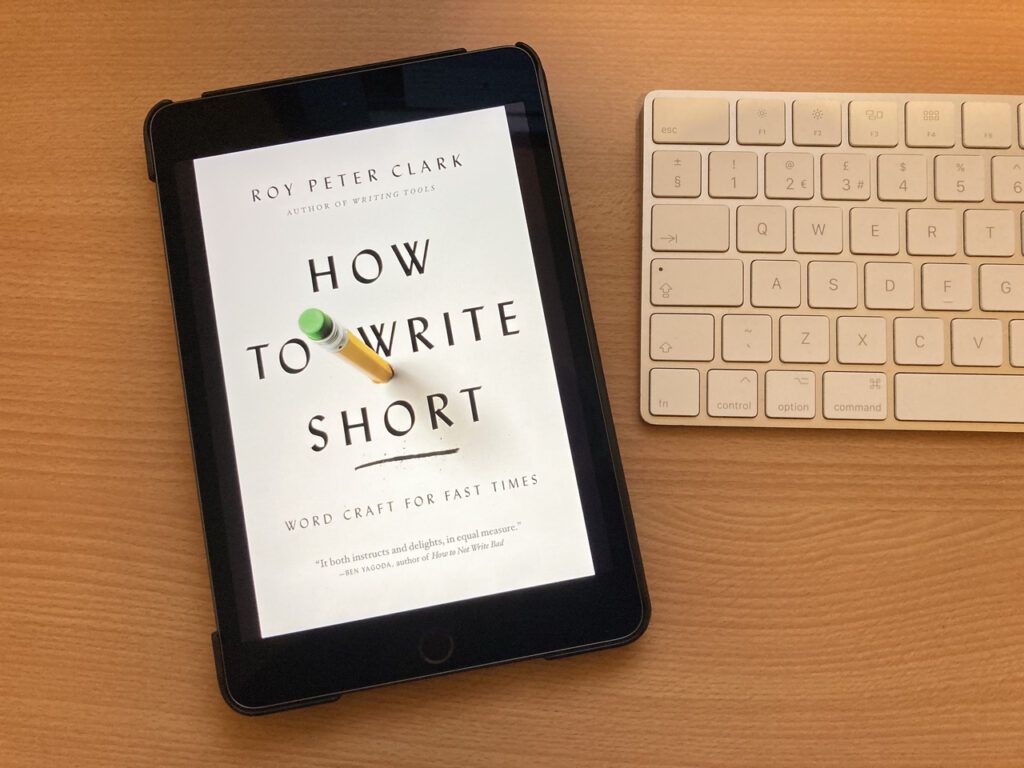
I recommended a book by Roy Peter Clark, called “How to write short” and it’s a classic from a master of the craft. He shows you how to write compelling messages and engaging content, using as few words as required. I don’t do book reviews. I don’t do affiliate links. You can search for it or find it on his website, using the link above. If it sounds like something you want to improve on, grab a copy. In my eyes he’s the boss of writing short, highly effective copy.

Back to Deborah’s question.

She thanked me for the recommendation. Then she asked me the question that inspired this post. She wondered why I only recommended one book!

Here’s my answer.

More importantly, here’s where you’ll discover how to have unlimited, free access to the world’s best marketing writers and communicators!

I study and practice my craft, daily

When I started out in this business, I learned everything I knew about sales and marketing, by studying the work of others. Initially I studied the work of colleagues, who were older and more experienced than me. Then I widened it out to all my inputs.

So, whenever I read or heard a powerful message, I’d write it down. Then, I would unpack the message to figure out why it was so powerful or motivating. I wanted to learn from it.

And I still do the exact same thing today.

I gather inspiration and rather than just swipe it, I swipe it and study it. The wordplay, the rhythm of the syllables. The mental imagery generated. The degree of urgency created… anything I can learn and grow from.

small business turn around, turn around times tough, things tough business

Here are some examples I noted and studied today.

They’re all from leading companies and brands – – those with the financial resources to hire the greatest marketing writers in the world.

I studied.

  • High converting text from website buttons and contact forms.
  • Powerful calls-to-action on store signs.
  • High yield headlines.
  • Motivating paragraphs from marketing emails and letters.
  • Memorable straplines.
  • Engaging tweets.
  • Powerful slogans.
  • The copy used on packaging and products.
  • Social media profile copy.
  • Instantly clickable email subject lines.
  • … and everything else that attracts my eye or my ear.

Rolls Royce, Apple, Rolex, Disney… international brands of that size and influence don’t hire $100 an hour marketing writers. They hire the very best and money is no object. Their wording (like the examples on that tiny list) is worth a fortune to you and your business.

You don’t have to wonder if their copy works. Yes, it works!

You don’t have to wonder if the copy writer knows what they’re doing. Yes, they REALLY do know what they’re doing!

My task and yours, if you’re interested, is to look for the lessons. Let these masters of the art teach you with their examples of excellence.

Then, use your version of it.

Put it into play.

Test what you’ve learned and measure the results.

Refine it, and then test again.

It’s a great way to improve. Because I publish information very regularly, I’m able to test what I learn just as regularly. I can quickly discover what’s effective and what’s less useful. This is one of the many reasons I believe every professional should write a blog and / or a newsletter. It’s perfect for developing your skills and style.

Making your work stand out

By not reading the same books (or subscribing to the same publications, podcasts and Youtube channels) as others in my profession, I’ve been able to develop my own style. It’s a style that’s often rough around the edges. It’s unorthodox. It’s certainly not perfect.

It can’t be perfect.

Here’s why.

The moment you’ve written something perfectly aligned with the style-guide, you’re camouflaged among the thousands who strive for that same version of perfection. Lost in an ocean of similar writing.

You’re no longer a voice. You’re an echo.

You’re no longer a signal. You’re a noise.

The way I write is imperfectly my style. And it constantly evolves, as the marketplace does.

Conclusion

You can learn a lot about written communication from the most effective and talented experts on the planet – – by way of non-obvious sources. The work of these genius writers is everywhere.

Seriously.

It’s on cereal boxes. It’s the book titles on the world’s best-selling books. It’s what catches your eye on magazine covers. It’s in movie trailers… it’s everywhere. And the people paid to write that material are among the best paid, most effective writers in the world. They’re really good. And worthy of our attention.

That’s not all.

By pulling from these priceless, non-obvious sources, different sources, you also give yourself the freedom to develop your own style and your own voice. Essential assets if you want your message, your work and your products or services to get the attention they need.

The world’s best are there for you to study and learn from. It’s free. And yours for life.

What an amazing opportunity.

The BIG marketing problem that no one talks about

By Jim Connolly | June 11, 2021

Marketing silence, feedback marketing

Image: Nick Fewings

You’ve probably heard the old phrase; “Silence is golden“?

Well, that’s not the case when it comes to the marketing of your business. In today’s post, I’ll show you how silence can have a devastating effect on your results, plus how to avoid it from happening to you.

I was in a coffee shop once, when a guy with a very obvious hairpiece came in. He had natural, thick brown hair around his ears, with a jet black hairpiece on top. Of course, no one mentioned it to him. People just smirked when he wasn’t looking. Whether this guy needed the hairpiece for vanity or medical reasons, it’s entirely possible he has no idea that it’s so poorly matched to his natural hair.

A very similar kind of silence happens regularly in business. And when it does, it costs you a fortune.

Allow me to expand on that.

  • We check out the social media accounts of a potential vendor. We notice their updates are mostly just a series of sales pitches or automated quotes from famous people. We don’t tell them their social media activity is so dull that we leave in seconds. We silently move on.
  • We go to a website to check out a potential service provider. We then see that their site looks amateurish and decide not to consider them. We don’t email them to let them know their site created such a bad impression. We silently move on.
  • We start reading a poorly-written piece of marketing and quickly discard it. We don’t call the company and tell them their content is losing them business. We silently move on.

Faced with all this silence, how do you figure out if what you’re doing is working for you?

You ‘listen’ to what your results are saying. That’s where the most accurate signal is.

Don’t wait for someone to tell you your marketing sucks. Because they won’t. Your friends don’t want to upset you. Your competitors don’t want you to become a threat. And strangers don’t give a rat’s ass.

In short, the silence of your marketplace is easy to miss. If things are too quiet, for too long, take action.

  • « Previous Page
  • 1
  • …
  • 4
  • 5
  • 6
  • 7
  • 8
  • …
  • 68
  • Next Page »

Creative Marketing Tips

Get my best ideas delivered direct to your inbox. Just add your email below.

You can unsubscribe at any time. I respect your privacy.

Jim Connolly

Hi! I'm Jim Connolly and I use creative marketing to help small business owners increase sales, boost profits and build amazing businesses. Read more here.

Featured by

marketing advice, marketing help

Categories

  • AI (9)
  • Blogging (407)
  • Business development (495)
  • Copywriting (308)
  • Creative Marketing (1,669)
  • Email marketing & mail shots (187)
  • Professional development (546)
  • Social media marketing (358)

Hosting provider

20i hosting

Search

Recent posts

  • The difference is huge. No. Bigger than that September 25, 2026
  • Keeping it real September 10, 2026
  • Lessons from highly successful business owners September 2, 2026
  • Sign your work. Grow your business August 17, 2026
  • Get creative: Let others market your business for free! August 7, 2026
  • Traditional marketing is dead July 27, 2026
  • The stupid game July 13, 2026
  • Hey! Not so fast! July 6, 2026
  • How to get your fees right June 23, 2026
  • A 3 shot espresso for your business June 17, 2026
  • Unproductive? You’re probably just bored June 12, 2026
  • Make AI grow your business June 8, 2026
  • It motivates people to take action, now June 4, 2026
  • Is your business one of the 50% that prospects now avoid? Probably! May 30, 2026
  • Give your best ideas away for free. Here’s why May 12, 2026
  • AI is wiping out your competitors. Now take their market share May 5, 2026
  • Powerful words for your marketing toolbox. Part 2 April 29, 2026
  • Your social media is sending an important message April 27, 2026
  • When was the last time? April 23, 2026
  • Jim, why are my sales numbers down? April 20, 2026

Creative Thinking?

My Creative Thinking Website
  • Home
  • About
  • Let’s Grow Your Business

Copyright © 2026 Jim Connolly