Jim Connolly Marketing

  • Home
  • About
    • About Jim Connolly
    • Jim’s small business marketing newsletter
    • Top Marketing Tips for 2026
    • Privacy Policy
    • How I use cookies
    • Contact
    • Disclosure
  • Let’s Grow Your Business

This is unreasonable, right?

By Jim Connolly | August 3, 2020

I’ve had an idea that could help your business in multiple ways. It’s an unreasonable idea. Yes, I know that sounds weird.

Allow me to explain.

marketing unreasonable

If a product or service is only reasonably good, it’s nothing special. It’s just okay. It’s certainly not good enough to motivate people to buy from you, hire you or tell all their friends about you.

So… this got me thinking

The opposite of reasonable is unreasonable.

What if someone decided to embrace an unreasonable mindset to their business and the services they provide?

I believe it could lead to some significant improvements. Improvements that would encompass their whole business. Here are just a few examples of what an unreasonable approach might look like, which immediately came to mind.

A business owner could choose to:

  • Be unreasonably committed to customer service and the total happiness of their clients or customers.
  • Show unreasonable persistence when it comes to delivering projects on time and keeping their promises.
  • Have an unreasonable attitude to life long learning and developing their potential.
  • Set the bar unreasonably high on the quality of work they’re willing to ship. (This will help you) get it right.
  • Have an unreasonable passion for helping others to succeed.

Surely, any business operating from that kind of unreasonable mindset, is going to get noticed. They’re going to retain their clients for longer, too. And yes, they’re going to give their clients and their marketplace something interesting to tell their friends about. That’s a lot of important boxes checked, as a natural consequence of being unreasonable.

In short, if being reasonable isn’t working for you, you now have an unreasonable alternative to consider.

Why people criticise you and how to deal with it in just 3 steps

By Jim Connolly | August 1, 2020

why people criticize you, criticise you, how deal with critics

Photo: Shutterstock.

Here is a simple, powerful 3 step process, to help you totally overcome the impact or fear of negative criticism. It will show you why people criticise you and how to deal with it… fast!

Broadly, all of your critics can be divided into 1 of the following 2 groups:

  1. Those who want to help you and encourage you.
  2. Those who want to hinder you and see you fail.

It’s the second type of critic, which I want to talk to you about today. It’s that type of negative criticism, which stops many of us from being willing to stand out. It stops us putting our work or art out there. It encourages us to keep our head down. To follow the crowd.

The power of a critic

If you want your business to stand out, to attract lots of word of mouth referrals, it’s essential that you stop negative criticism from influencing you.

Why?

Because just about everything you need to do in order to market your business successfully, is visible and wide open to criticism. Anything you do, which is different enough for the marketplace to value it, is also visible enough for critics to criticise it!

So, you either learn to deal with it or do what most small business owners do, and run a business in the shadows, which is not a wise marketing move!

3 Steps to deal with negative criticism

Fortunately, dealing with negative criticism is relatively easy, so long as you learn to accept it for what it is. Once you understand why criticism happens, it eliminates its negative impact and allows you to focus all your effort on putting your best work out there.

Because I publish lots of material to a large audience, I get negative criticism regularly. In fact, the better my work, the more likely it is that at least one person will criticise it or criticise me for writing it.

Here are the 3 steps I used, to totally eliminate the negative impact of criticism.

1. Deal with criticism by considering their motivation

When someone feels the need to give you negative criticise you or your work, they are satisfying a need they have. Note: it’s always about them, not you or your work.

Even if someone is criticising you because they hope it will help you improve, it’s to satisfy their desire to help.

So, whatever the intention, criticism is always about the critic!

Understanding this is a key part of disempowering the critic’s influence over you and how you feel. When you accept that it’s NOT about you or your work, you see criticism for what it is: a selfish act perpetrated to feed a need the critic has. Either positive or negative.

Of course, even if the motivation is negative, if they are an expert in the field, you can still learn from what the critic says. Scientists often negatively criticise the work of their peers, people who really know their subject. That kind of criticism may be negative, but it can bring value with it.

This brings us nicely to the second step.

2. Deal with criticism by considering the source

why people criticize you, criticise you, how deal with critics, criticism
Photo by Ann H on Pexels.com

Is the person who is negatively criticising you, qualified to criticise you? Most criticism is unqualified. That’s to say, the person criticising your work doesn’t know enough about the subject or what you’re trying to achieve, to offer anything other than an uninformed opinion.

Negative criticism from an unqualified, uninformed source is of so little value that it’s meaningless.

It makes zero sense to pay it any of your valuable attention.

3. Deal with criticism by using it to make you stronger

With each piece of criticism that you run through the previous 2 steps, you build your resistance to the negative impact of critics. Just as lifting weights builds your muscles, processing negative criticism builds your emotional defences. Each time you are criticised and see it for what it really is, it becomes easier. Less daunting. Less fearsome.

Pretty soon, you learn to be fascinated by criticism and what it tells you about the other person. You quickly learn that if no one is criticising you, you are either invisible, doing work that fails to stand out… or both.

I hope you found these ideas on why people criticize  you and how to deal with criticism useful. More importantly, I hope you use these ideas to achieve what you’re capable of.

Business development seldom exceeds professional development

By Jim Connolly | July 26, 2020

content marketing

I was just going through some notes I took, following a talk I gave to a group of entrepreneurs. I spotted something, which they found extremely useful on the day. So, I thought I’d share it with you.

It’s based on my answer to a great question. Someone wanted to know why over a thousand articles on my blog are tagged as professional development, when it’s a marketing blog.

Here’s a shortened version of my reply.

The reason I focus so heavily on professional development, is that without it, NONE of the information a business owner receives is of any value to them. I then shared one of the foundations of all business success:

Business development seldom exceeds professional development.

In other words, we can’t give our business something, which we don’t have. Here are a few of the examples I used.

  • We can’t avoid mistakes if we fail to see them coming.
  • We can’t benefit from opportunities if we’re blind to them.
  • We can’t enjoy a bumper crop if we harvest too soon.

I then explained how that’s only 50% of the problem caused by a lack of professional development.

Here’s the other half. And it’s a biggie!

Even if you give a business owner the exact answers they need, if they lack professional development… they’ll ignore it. That’s because when you lack professional development, REAL improvement always, always sounds scary.

It looks like this.

  • Improvement = change.
  • Change = risk.
  • Risk = fear.

Every business starts to grow after it launches. Then, the business reaches a certain point and hits a plateau. Some plateau in the first 12 months. Others don’t plateau for a decade.

And it doesn’t matter! Because it’s what happens when they reach that plateau that makes all the difference.

Business owners tend to fall into one of the following two, broad groups.

Group one

Business owners in this group need additional professional development. They are deliberately targeted by marketers, who exploit the business owners eagerness to grow their business. They entice them with webinars, Facebook Lives, growth-hacking secrets, and countless online training products; all promising “too good to be true” results.

That kind of advice sells. It’s all gain, with no real effort. And those testimonials are always so inspirational. It’s easy money too, because there’s an endless stream of business owners… hoping that THIS motivating promise, MAY finally be the one that works.

Of course, it fails.

It has to fail.

Why?

Because as we know, in business, meaningful improvement only comes after making meaningful improvements (meaningful changes). If you do what you’ve always done, you’ll get what you’ve always got. Business, like everything else in life, works on the law of cause and effect.

Now for some great news.

Group two

Every business owner in this group, (including me), started in group one. Then, at some point, they figured out they were wasting a lot of time and making very little progress. So they jumped ship into group two.

They now insist on expert advice from proven professionals. Professionals who will look at their unique situation and provide the unique roadmap or solutions they need. It’s why business owners in group two thrive.

Think about it. There’s a really good reason why:

  • Literally every successful business owner makes important decisions based on trusted, informed, targeted advice.
  • Literally none of them make important decisions, like how to grow their business, based on the toxic junk that business owners in group one rely on.

That’s why I focus so much of my content on professional development. I try and educate business owners, so they avoid the stress and wheel-spinning of being in group one. I strive to inform business owners who are trying to get the help they need, but looking in the worst possible places.

I hope you found this useful. Moreover, I hope you do something with it.

A marketing lesson from the world’s best coffee shops

By Jim Connolly | July 25, 2020

marketing coffee shops, coffeeshops

What are people hoping for, when they hire you or buy from you? That’s one of the most important questions in marketing.

Think about it.

  • People visit Facebook, because they hope it will entertain, inform or connect them.
  • People donate to charity, because they hope it will make things better for others.
  • People relocate to nice areas, because they hope it will improve their quality of life.
  • People subscribe to a newsletter, because they hope it will be useful.
  • People buy big name brands, because they hope it will ensure high quality.
  • People buy from local providers, because they hope it will help the local economy.

Your prospective clients are just the same. They’re hoping for something. And it isn’t always obvious.

A marketing lesson from coffee shops

Ask the owner of any successful coffee shop and they will tell you, the quality of their coffee isn’t the secret of their success. It isn’t even in the top 5 reasons why people choose them over their less successful competitors.

Instead, successful coffee shops thrive because they focus on what people hope for, when they visit a coffee shop. People hope it will provide them with a great place to meet friends, an interesting change of environment, a space where they can relax… and a thousand other non-coffee-related things.

Struggling coffee shops fail to provide the kind of experience, which the marketplace is hoping for. So even if their coffee tastes great, it doesn’t matter. That’s because no business, in any industry, can succeed or even survive, by failing to meet or exceed what people hope for.

As business owners, our task is to uncover what our prospective clients are hoping for. And then make it a foundational element of our service and our marketing. Offering a great service (or great coffee) isn’t enough, by itself.

What is inspiration? Find out and get inspired!

By Jim Connolly | July 24, 2020

So, what is inspiration and how can you tap into it when you need to become inspired?

what is inspiration, whats inspiration?

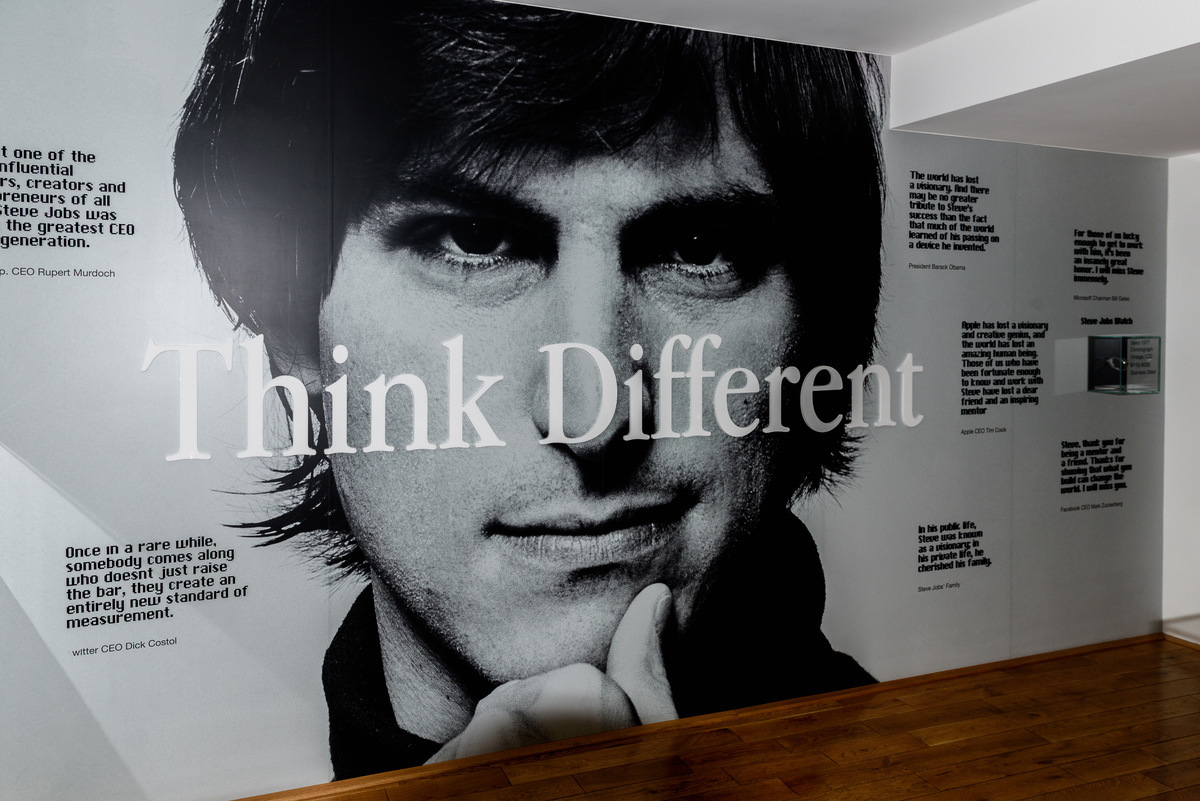
Today, I’m going to share one of the ideas used by Pablo Picasso and Steve Jobs, when they were looking for creative inspiration. I’m also going to share a couple of tips of my own, but first, let’s take a brief look at the definition of inspiration.

What is inspiration?

The Oxford Dictionary defines inspiration as:

“The process of being mentally stimulated to do or feel something, especially to do something creative”.

Commonly we think of people being randomly struck by a flash of inspiration, so we see inspiration as a feeling that occurs almost by accident. However, as the start of that dictionary definition states, inspiration is a process. We become mentally stimulated (inspired) to do something. For those who want to feel inspired, the key is to learn how to create an inspired state when we need to.

What is inspiration? Part 2: How to feel inspired

There is no single, set way to make every person feel inspired. That’s because we are all different and are inspired by different things. You need to learn what works for you and one of the best ways to do this, is to think about what you were doing the last few times you felt inspired. Consider where you were and what you were doing, etc. Look for any common factors and incorporate these the next time you need some inspirational ideas or answers.

Here are just a tiny number of situations, which trigger creative inspiration:

  • Some people find inspiration in books.
  • Some find inspiration in music.
  • Some people are inspired when surrounded by nature.
  • Some people grab a pad and some colouring pencils and start doodling.
  • Some people become inspired to create, when an internal or external deadline approaches. This one is really interesting, because it shows how creative inspiration can indeed be self driven.
  • Some find inspiration through affirmations or positive self-talk.
  • Some find inspiration comes when they are doing some type of physical activity. For me, it’s walking that works best.
  • Some find inspiration in the design of an everyday item. (More on that in a moment.)
  • And others find all of the above work to a lesser or greater degree.

What is inspiration? Part 3: Become inspired on purpose

As well as being potential sources of inspiration, each of the scenarios above has another thing in common. Can you guess what it is?

They are all under our control!

That is to say, we can decide to take any of the actions above when we want to feel inspired. We don’t need to wait to be struck by inspiration. We can find the things that work best for us, then build a strategy that uses them. So, when we ask ourselves what is inspiration, part of the answer is that inspiration is something under our own direct control.

I found that I often got my best ideas when I was walking. This Stanford study agrees. So, I incorporated a daily walk into my routine. I always carry an audio recorder with me, then when an idea comes I can record it. I write thousands of words every day, most of which are inspired by ideas captured during my walks. I also find that I get lots of creative ideas when I am in the company of other creative people, [problem solvers].

“I write when I’m inspired, and I see to it that I’m inspired at 9:00 every morning.” Peter De Vries.

That quote from Peter De Vries makes a great point. We can choose to help ourselves become inspired or we can be a servant to inspiration. We can wait for the fictitious muse to arrive or we can take control and direct our own mind.

What is inspiration? Part 4: Great artists steal

Many people believe that in order to create, their inspiration needs to come from a wholly unique idea; something no one has ever thought of before. However, when we look at the creators of the most amazing art, inventions and ideas, we find the opposite.

Pablo Picasso famously said:

“Good artists copy, great artists steal.”

This phrase became popular again in 1996, when the late Steve Jobs repeated it in a PBS documentary called Triumph of the Nerds. In that interview, Jobs went on to say:

“We have always been shameless about stealing great ideas.”

What Jobs was talking about, was not ripping off a piece of work and claiming you created it. Far from it. He went on to explain that he and his team would “expose ourselves to the best things that humans have done”, and then try to incorporate them into something unique of their own.

what is inspiration, what's inspiration

A well known example of the kind of inspiration that Steve Jobs was talking about, comes from the creator of roll on deodorant.

Helen Barnett Diserens was inspired by the way ink flowed from a ballpoint pen and saw how the process could be applied to any liquid with similar properties. As you know, the roll on deodorant went on to become one of the most popular hygiene products in history. This was around 80 years after John J. Loud invented the ball point pen, which inspired her.

An even better example is the invention of the tablet computer. The idea behind the tablet devices we see today, was inspired by at least 2 existing ideas: The clay tablets used 3,000 years ago and the modern notebook / laptop.

Little, if anything, is truly new. We should understand and embrace this idea, if we want to remove one of the biggest barriers to creative inspiration. We just need to remember that there’s a big difference between stealing ideas to create something new – and copying or ripping off an existing idea. Remember that Picasso quote from earlier: ‘… great artists steal’. They don’t copy!

What is inspiration? Part 5: Creating your inspiration strategy

It starts by deliberately monitoring the things that inspire you the most. Write them down. Then, incorporate them into your work flow, so that you can get into an inspired state when you need to, rather than just when it randomly occurs.

what is inspiration, whats inspiration

What works for me?

I incorporated a walk into my work flow when I discovered that it was how most of my best ideas came to me. I also learned that if I read my email first thing in the morning, it took my focus away from creating. So, my workday starts with a walk, followed by the commitment to write 500 words or solve a problem, before I start on my email.

Just as Peter De Vries made sure to be inspired at 9am each workday, we too need to stop waiting for everything to be perfect and proactively seek inspiration – doing what works for us.

Build a recipe that works for you, then use it every time you need to do some creative work or find a creative answer. Don’t wait for inspiration. Deliberately encourage it.

What is inspiration? Part 6: Doing the work

As well as inspiring ourselves to create, we also need to motivate ourselves to put what we have created into action. It’s one thing to have a great idea sketched out on paper – it’s something else to actually use that idea.

We need to learn to give our ideas the chance to fly. We need to give our answers the chance to make a difference. This means we need to back them up with intelligent activity.

So, what is inspiration? It’s something you control, which enables you to produce your best work.

Steve Jobs photo Copyright: Albert Watson

I have some news for you

By Jim Connolly | July 20, 2020

It’s the 12th anniversary of Jim’s Marketing Blog.

But this one is very different from the others.

Previously, I’ve had to think whether to commit my time and money for another year. It’s a big commitment. The time I spend each week creating free content for my readers, significantly reduces the hours I have available for fee-paying clients. And with thousands of pages of content online, the blog would still attract more client enquiries than I need.

However, this year, the decision to carry on was easy.

How easy?

I’d forgotten about the annual renewal decision until literally 20 minutes ago!

The impact of the coronavirus on small and medium-sized business owners, has motivated me more than ever to try and help. I’m working on ideas all the time. My goal is to be as useful as possible, to as many people as possible. The best way I know to do this, is through the free information I provide on the blog and email version of the blog.

So, I plan to be here for at least another year.

By the way, if you want to say hi or just see what I’m up to, you can catch me on Twitter @JimConnolly. Look for the verified tick to ensure it’s me.

  • « Previous Page
  • 1
  • …
  • 48
  • 49
  • 50
  • 51
  • 52
  • …
  • 91
  • Next Page »

Creative Marketing Tips

Get my best ideas delivered direct to your inbox. Just add your email below.

You can unsubscribe at any time. I respect your privacy.

Jim Connolly

Hi! I'm Jim Connolly and I use creative marketing to help small business owners increase sales, boost profits and build amazing businesses. Read more here.

Featured by

marketing advice, marketing help

Categories

  • AI (9)
  • Blogging (407)
  • Business development (495)
  • Copywriting (308)
  • Creative Marketing (1,669)
  • Email marketing & mail shots (187)
  • Professional development (546)
  • Social media marketing (358)

Hosting provider

20i hosting

Search

Recent posts

  • The difference is huge. No. Bigger than that September 25, 2026
  • Keeping it real September 10, 2026
  • Lessons from highly successful business owners September 2, 2026
  • Sign your work. Grow your business August 17, 2026
  • Get creative: Let others market your business for free! August 7, 2026
  • Traditional marketing is dead July 27, 2026
  • The stupid game July 13, 2026
  • Hey! Not so fast! July 6, 2026
  • How to get your fees right June 23, 2026
  • A 3 shot espresso for your business June 17, 2026
  • Unproductive? You’re probably just bored June 12, 2026
  • Make AI grow your business June 8, 2026
  • It motivates people to take action, now June 4, 2026
  • Is your business one of the 50% that prospects now avoid? Probably! May 30, 2026
  • Give your best ideas away for free. Here’s why May 12, 2026
  • AI is wiping out your competitors. Now take their market share May 5, 2026
  • Powerful words for your marketing toolbox. Part 2 April 29, 2026
  • Your social media is sending an important message April 27, 2026
  • When was the last time? April 23, 2026
  • Jim, why are my sales numbers down? April 20, 2026

Creative Thinking?

My Creative Thinking Website
  • Home
  • About
  • Let’s Grow Your Business

Copyright © 2026 Jim Connolly