Jim's Marketing Blog

Marketing tips and ideas to help you grow your business

  • Home
  • About
    • About Jim Connolly
    • Jim’s Small Business Marketing Newsletter
    • My top marketing tips for 2025. Yours now, for free!
    • Privacy Policy
    • How I use cookies
    • Contact
    • Disclosure
  • Hire me
    • Let’s Grow Your Business
    • Pick My Brain for the results you need!

Publish the process: Field Offices

By Jim Connolly | October 21, 2021

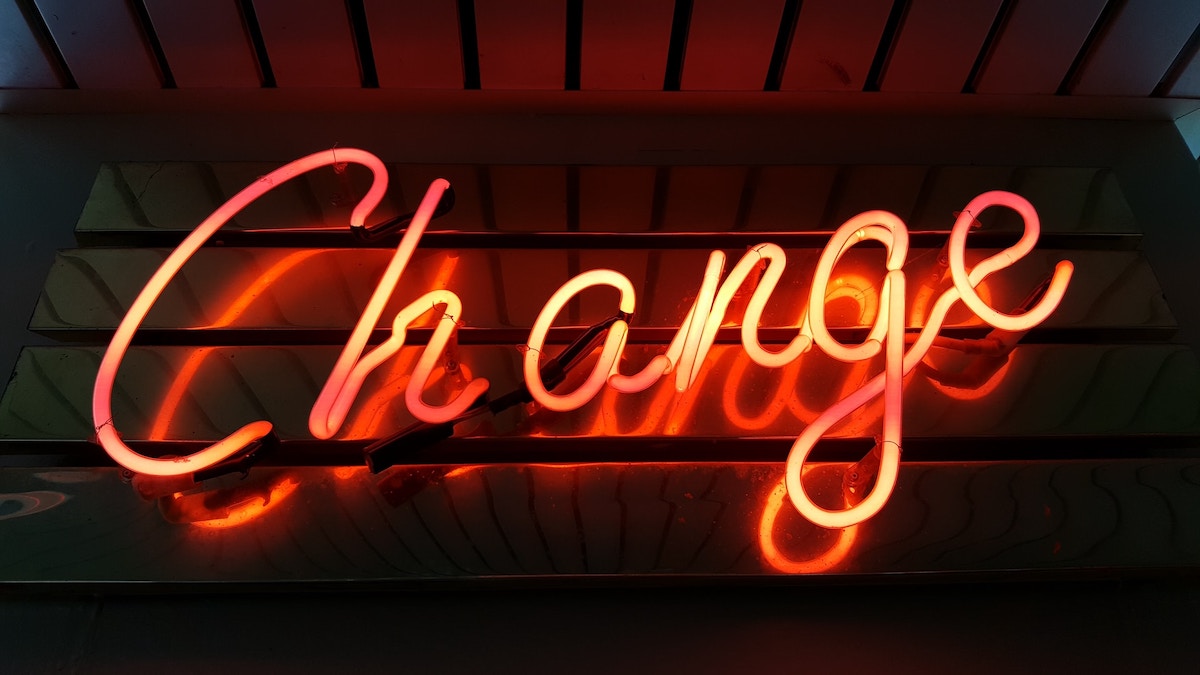
field offices, change scenery,

In the early days of the blog, I’d often share a look behind the scenes at my working day. It’s something I call publishing the process and today it’s back!

Just as before, I’ll share ideas I’m working on, the tools I’m using, useful new resources, the way I collect ideas… as well as things like sources of inspiration, etc.

Let’s kick things off with: Field offices

Lots of readers have asked me about how and why I use field offices. It’s something I’ve mentioned in passing in recent blog posts and newsletter articles. But never in any detail.

It’s a relevant topic to start with, as I sit in a field office right now; sipping espresso, with my MacBook Air finally connected to the coffee shop’s WiFi.

“[…] We get into ruts at work by following strict routines. That’s the problem! […]”

Dr. Todd Dewett

How many times have you had a great idea or flash of insight, when you’re in the shower, or when you’re at the gym or stuck in traffic?

It happens to all of us and it happens a lot.

One reason for this is that the change of scenery disrupts your routine and provides you with multiple, different inputs. Fresh sources of stimulation. And each of these influences how we think and feel, to a lesser or greater degree.

Like thousands of others, I’ve found that the same thing happens when I deliberately choose to break the routine of working from a non-traditional working environment.

Field offices offer 2 major benefits

  1. Field offices provide you with the same valuable, fresh / different ideas and insights, that often come randomly in the shower. However, by deciding to deliberately kick-start the process, you have far greater control over when it happens.
  2. Because you’re equipped with the tools you work with, for me it’s a laptop or a notebook and pen, you can capture the idea or insight and instantly get to work on it.

I also find it helps to use multiple different locations and settings. Here are the ones I’ve used recently.

  • A bench on the Chesterfield Canal.
  • A coffee shop (in the above photo).
  • The grounds of Lincoln Castle and also Conisbrough Castle.
  • My garden.
  • Sherwood Forest.

As with anything like this, some people will find it extremely useful, others will find it a lot less useful. I strongly recommend you, at least, to give it a try. See it it helps and how it helps.

How it helps?

Yes.

Field offices work in different ways for different people.

I find that they’re of most use to me when I’m stuck with an idea. Other people I know, find field offices most useful when writing reports. Whilst others, still, use them exclusively when they’ve spent too many days at a desk, and feel they ‘just need’ a change of scenery.

I hope you found this look at field offices useful. Moreover, I hope it inspires you to give it a try the next time you’re looking for a creativity boost.

The right way to write. Is wrong!

By Jim Connolly | September 12, 2021

How to write wrong

Some general advice is extremely useful or at least broadly correct. It applies to the majority of people in the majority of cases. You know… like, brush your teeth regularly.

Other general advice is a lot less helpful. It may work for the majority of people, but not for the rest of us.

The general advice on the best way to write is absolutely in that latter category. And as I get asked about this a lot, I thought I’d share some ideas with you.

The right way to write

When I started writing commercially, the general advice at the time was to get into a routine. This routine then became your recipe for writing. It was one less thing to have on your mind, so you were free to focus on your writing. From memory, some of the advice included.

  • Having a set time to write each day.
  • Writing from a familiar location; your office desk for example.
  • Avoid distraction. This one was huge.
  • Use the same keyboard, pen, paper, notebook etc.

I lasted about 2 days.

My recipe for writing turned out to be almost the exact opposite. For me, the most creative way to work is to mix things up. Some examples of how I do this includes.

  • I write from lots (and lots) of different locations. What Andy Ihnatko calls field offices. These range from my studio, my local coffee shop and Sherwood Forest, to a bench in the grounds of Lincoln Castle and a table on the canal that goes through the village where I live
  • I write using different devices. These include an iMac in my studio, my phone, an iPad Pro, a really old MacBook Air (used for the very last time to write this post) and a MacBook Pro.
  • I write in the morning before the world wakes up (often). In fairness, that’s when around 60% of all my writing is done. However, I also write at lunchtime (here’s a recent example) and in the late afternoon.
  • I write best with background noise. This is why I do so much writing outdoors. Even when I’m in my studio, I have instrumental music playing. I find lyrics distracting.
  • I always have a pen with me and a notebook. However, the pen could be one of a dozen or more that I use regularly. The notebook depends on what’s on my production table in the studio, what’s in my back pocket, my bag or my car. I have notebooks everywhere.

My recipe for writing is also wrong

Rest assured: My recipe for writing is just as wrong (for you) as the advice I was given when I started out.

So what’s my point?

I’ve discovered that with any kind of creative work, we each need to find what works best for us. Our unique blend. Sometimes this means ignoring whatever the prevailing wisdom is. Just because something worked for one of those creative professionals selling online courses or books… it may not work for you or me.

If you have a set way to write (or do anything creative) and you’re keen to improve, here’s a suggestion. A general suggestion, which applies to almost as many people as, “brush your teeth”.

Try something new.

Mix it up (just a little).

This is especially the case if you’re struggling to create. It’s possible that a few minor revisions regarding the tools you use, the locations you create from and times of day you create, could improve things.

Good luck with discovering the right way FOR YOU to write. I Really hope you found this useful.

Google’s thin content problem

By Jim Connolly | September 5, 2021

google thin content, thin content seo

Image: Yannick Pulver. 

Business owners and marketing professionals have lots of things in common.

Here’s one of them.

Your time and your focus are of great importance. So you need access to accurate, valuable, to-the-point information.

Google is determined to ensure you don’t find it.

How?

By making to-the-point information, invisible.

It’s a problem Google has created, by not indexing something they call thin content. According to Google’s guidelines, a key element of thin content is anything that doesn’t use enough words. SEO experts think it’s a minimum of around 500 words. But a few thousand words is much better. In short, Google rewards and strongly encourages over-long content.

Even that 500 word minimum excludes about 90% of my posts from Google search. That’s okay. I optimize for people first, not Google / Alphabet.This post is under 250 words, including the title.

Here’s how many of my fellow professionals locate the best answers, fast.

Think of the experts whose work you know and trust. Find their sites. Then bookmark them. Ensure they share information there, as some expert sites are just stores. And like me, you already own their products.

Then, whenever you need trusted information, which isn’t diluted with the anti thin content fluff that Google requires, use the search function on your expert sites to get your answers.

By bookmarking the leading experts, two things happen.

1. You get information you can trust.

2. You get that information, without the confusion caused by rambling content.

Win, win.

The huge Google problem, which they don’t give a rat’s ass about

By Jim Connolly | August 29, 2021

Goolge content theft, crooks

Image: Pawel Czerwinski  

This brief post is unlikely to be indexed by Google. Although it’s written for humans (like you), it’s value will be determined by Google’s famously incompetent bot. The bot needs a minimum of three hundred words in order to get a handle on what the topic is.

That’s why lots of blog posts and articles read so poorly. They’re deliberately written over-long. The author is playing the Google game. If they want search traffic, they have to add unnecessary fluff. They also need to keep repeating certain words and phrases, or Google’s bot won’t know what to rank them for.

Google’s stolen content problem

The Google game is like most games. The vast majority play by the rules. Others don’t.

My posts are stolen by criminals within minutes (sometimes seconds) of publication. They use software to publish them and submit them to Google’s index.

In many cases, their illegal copy of my copyright protected work is chosen by Google as the original ‘canonical’ version. My original is then seen as a copy. I could even be penalized by Google, for Google’s own mistake. There’s no workable recourse. The bad guy wins.

Google search is broken. And for the foreseeable future it will stay like that. They’ve trained writers how to write for their extremely limited Google bot. The bad guys know how to profit on autopilot. It costs Google nothing. So, there’s no motivation for them to put their house in order.

When an service is as huge as Google, it’s beyond reproach. Yes, if a major publication complains, Google takes immediate action. The rest of us need to live with it. We need to play the Google game and accept theft of our work. That really sucks, but they’re Google… so!

BTW: This was 299 words.

Here’s an update: Google indexing scraped content from my blog: Part 2

How to get free access to the world’s best marketing writers

By Jim Connolly | August 26, 2021

Write better marketing copy, marketing messages

Yes, you read the title of today’s post correctly. I have lifelong, free access to the world’s best marketing writers, and you can have it too.

This post started off with an email from Deborah.

My associate Deborah has a seemingly limitless capacity to ask great questions. The kind of question’s I’ve never asked myself before. Earlier today, Deborah asked me for book recommendations, to help her improve her writing. She’s already a great writer, and it’s easy to see why when she’s always seeking out ways to further improve.

That wasn’t the question that prompted this post. It was only her starter question.

Her follow-up was the kicker!

Just one book?

I recommended a book by Roy Peter Clark, called “How to write short” and it’s a classic from a master of the craft. He shows you how to write compelling messages and engaging content, using as few words as required. I don’t do book reviews. I don’t do affiliate links. You can search for it or find it on his website, using the link above. If it sounds like something you want to improve on, grab a copy. In my eyes he’s the boss of writing short, highly effective copy.

Back to Deborah’s question.

She thanked me for the recommendation. Then she asked me the question that inspired this post. She wondered why I only recommended one book!

Here’s my answer.

More importantly, here’s where you’ll discover how to have unlimited, free access to the world’s best marketing writers and communicators!

I study and practice my craft, daily

When I started out in this business, I learned everything I knew about sales and marketing, by studying the work of others. Initially I studied the work of colleagues, who were older and more experienced than me. Then I widened it out to all my inputs.

So, whenever I read or heard a powerful message, I’d write it down. Then, I would unpack the message to figure out why it was so powerful or motivating. I wanted to learn from it.

And I still do the exact same thing today.

I gather inspiration and rather than just swipe it, I swipe it and study it. The wordplay, the rhythm of the syllables. The mental imagery generated. The degree of urgency created… anything I can learn and grow from.

small business turn around, turn around times tough, things tough business

Here are some examples I noted and studied today.

They’re all from leading companies and brands – – those with the financial resources to hire the greatest marketing writers in the world.

I studied.

  • High converting text from website buttons and contact forms.
  • Powerful calls-to-action on store signs.
  • High yield headlines.
  • Motivating paragraphs from marketing emails and letters.
  • Memorable straplines.
  • Engaging tweets.
  • Powerful slogans.
  • The copy used on packaging and products.
  • Social media profile copy.
  • Instantly clickable email subject lines.
  • … and everything else that attracts my eye or my ear.

Rolls Royce, Apple, Rolex, Disney… international brands of that size and influence don’t hire $100 an hour marketing writers. They hire the very best and money is no object. Their wording (like the examples on that tiny list) is worth a fortune to you and your business.

You don’t have to wonder if their copy works. Yes, it works!

You don’t have to wonder if the copy writer knows what they’re doing. Yes, they REALLY do know what they’re doing!

My task and yours, if you’re interested, is to look for the lessons. Let these masters of the art teach you with their examples of excellence.

Then, use your version of it.

Put it into play.

Test what you’ve learned and measure the results.

Refine it, and then test again.

It’s a great way to improve. Because I publish information very regularly, I’m able to test what I learn just as regularly. I can quickly discover what’s effective and what’s less useful. This is one of the many reasons I believe every professional should write a blog and / or a newsletter. It’s perfect for developing your skills and style.

Making your work stand out

By not reading the same books (or subscribing to the same publications, podcasts and Youtube channels) as others in my profession, I’ve been able to develop my own style. It’s a style that’s often rough around the edges. It’s unorthodox. It’s certainly not perfect.

It can’t be perfect.

Here’s why.

The moment you’ve written something perfectly aligned with the style-guide, you’re camouflaged among the thousands who strive for that same version of perfection. Lost in an ocean of similar writing.

You’re no longer a voice. You’re an echo.

You’re no longer a signal. You’re a noise.

The way I write is imperfectly my style. And it constantly evolves, as the marketplace does.

Conclusion

You can learn a lot about written communication from the most effective and talented experts on the planet – – by way of non-obvious sources. The work of these genius writers is everywhere.

Seriously.

It’s on cereal boxes. It’s the book titles on the world’s best-selling books. It’s what catches your eye on magazine covers. It’s in movie trailers… it’s everywhere. And the people paid to write that material are among the best paid, most effective writers in the world. They’re really good. And worthy of our attention.

That’s not all.

By pulling from these priceless, non-obvious sources, different sources, you also give yourself the freedom to develop your own style and your own voice. Essential assets if you want your message, your work and your products or services to get the attention they need.

The world’s best are there for you to study and learn from. It’s free. And yours for life.

What an amazing opportunity.

5 Tips to help you build a HUGELY valuable newsletter list

By Jim Connolly | August 2, 2021

newsletter lists, list building, email marketing

Here are 5 tips, to help you build a big and valuable newsletter readership or list.

Let’s go.

1. Go easy on the pitches

Make sure it’s a newsletter and not a badly disguised advertisement. Here’s the thing: People avoid advertising. We skip the commercials on TV. We pay developers to remove the ads from the free version of their apps. We see advertisements as unwelcome interruptions.

If your newsletter reads a little too much like a sales pitch, it will be largely ignored. This leads nicely into the next point.

2. Be useful

The more useful your newsletter is, the more your readers will value it and share it. Your ultimate goal is to build a large, targeted reader community, who become either clients, customers or advocates. None of that can be achieved with predictable, pedestrian content.

Useful content is what gives your newsletter legs. It’s what inspires people to subscribe, stay subscribed, share and make purchasing decisions. So, before you hit send on a newsletter, make sure it contains valuable, useful information. Provide answers to your reader’s problems. Share useful tips. Point your readers to helpful resources. You get the idea.

The more value you pack into each newsletter, the more your readers will value it… and the more they will value you. Think about that for a moment.

3. Get the design right

Even if your content is wonderful, people won’t take it seriously if the design looks poor. The first bite is with the eye.

If your newsletter provides valuable information, but the design looks amateurish or outdated, it’s like serving a delicious meal on a dirty plate.

So invest in the best design or newsletter template you can. Because whether your newsletter looks cheap or is presented professionally, it all reflects back on you.

4. Ask readers to share

Even if readers think your newsletter is great, it may not occur to them to share it. People are busy. Really busy. By reminding them, you plant the idea of sharing the newsletter in their mind. Moreover, you do this at the exact point, where they have just read it and enjoyed it. I used to have a section at the bottom of my newsletter, which said:

“If you have found this newsletter interesting, please share it with your friends”.

When I added that short message to my newsletter, the results were immediate and measurable. It’s amazing what a simple reminder can do.

5. Help it spread

Convert people who had your newsletter forwarded to them, into subscribers.

Imagine your friend had just forwarded a great newsletter to you. You’d want to get a regular copy, right? You don’t want to have to rely on your friend, remembering to forward each edition to you. So, I added the following sentence to the above message:

“If you have had this newsletter forwarded to you and would like a regular copy, click here.”

Never underestimate the power of a subtle, non-pushy reminder.

Make no mistake, newsletters can be an extremely powerful marketing asset. It’s why I make my best blog posts available in newsletter format. And it’s why I ask you to take your newsletter seriously and invest in it accordingly. Give it the time and effort it needs. Because the rewards for getting it right are huge. Really, really huge.

The BIG marketing problem that no one talks about

By Jim Connolly | June 11, 2021

Marketing silence, feedback marketing

Image: Nick Fewings

You’ve probably heard the old phrase; “Silence is golden“?

Well, that’s not the case when it comes to the marketing of your business. In today’s post, I’ll show you how silence can have a devastating effect on your results, plus how to avoid it from happening to you.

I was in a coffee shop once, when a guy with a very obvious hairpiece came in. He had natural, thick brown hair around his ears, with a jet black hairpiece on top. Of course, no one mentioned it to him. People just smirked when he wasn’t looking. Whether this guy needed the hairpiece for vanity or medical reasons, it’s entirely possible he has no idea that it’s so poorly matched to his natural hair.

A very similar kind of silence happens regularly in business. And when it does, it costs you a fortune.

Allow me to expand on that.

  • We check out the social media accounts of a potential vendor. We notice their updates are mostly just a series of sales pitches or automated quotes from famous people. We don’t tell them their social media activity is so dull that we leave in seconds. We silently move on.
  • We go to a website to check out a potential service provider. We then see that their site looks amateurish and decide not to consider them. We don’t email them to let them know their site created such a bad impression. We silently move on.
  • We start reading a poorly-written piece of marketing and quickly discard it. We don’t call the company and tell them their content is losing them business. We silently move on.

Faced with all this silence, how do you figure out if what you’re doing is working for you?

You ‘listen’ to what your results are saying. That’s where the most accurate signal is.

Don’t wait for someone to tell you your marketing sucks. Because they won’t. Your friends don’t want to upset you. Your competitors don’t want you to become a threat. And strangers don’t give a rat’s ass.

In short, the silence of your marketplace is easy to miss. If things are too quiet, for too long, take action.

Does your marketing look needy? Find out now

By Jim Connolly | June 4, 2021

marketing, needy, pushy

Image: Alexis Fauvet

No one wants their marketing to be seen as pushy or needy. It turns people away and hurts their brand. Why then are we constantly bombarded by that exact kind of marketing?

The answer is that it almost always happens by accident! In this post, I’ll explain why, PLUS I’ll show you how to avoid making the same mistake.

Marketing messages fall into one of the following broad groups.

  1. Pushy: I want you to buy my stuff. And I want you to buy it now.
  2. Helpful: You have a problem, and my product or service can solve it for you. This is how it works.

Here’s the challenge

Lots of great business owners who are in that second group, accidentally market their services, as if they were in the first group.

In other words, their marketing looks needy or self-serving, but that’s NOT what they are like! They’re great people. Dedicated, hard-working professionals and they genuinely want to help you.

So, why does this costly confusion happen?

Here are the 2 main reasons I have identified, plus how to avoid this from happening to you.

Misunderstood passion

When you’re eager to serve your marketplace, your passion can easily be mistaken as needy. You’re ready, willing and extremely capable. However, because you really want to help, because you really want to make a difference, your motivated message can wrongly appear to be self-serving. Maybe even desperate.

The irony in this scenario, is that the same passion that prospective clients value so much, is now actively working against you.

The way to avoid this from happening, is to be very intentional regarding your marketing messages.

Go through your marketing. But read it from the perspective of your marketplace. Think about the words you use. Make sure that everything is “them focussed”.

Tip: I give 2 examples here, which explain exactly what I mean.

Copying the wrong approach

Many, (perhaps most) small and medium-sized business owners use the wrong marketing strategy and tactics for their industry. This example from one of my readers gives you a powerful insight into how devastating it can be. It demonstrates why you need to be really careful about the tactics you use. It also shows you the specific, and common, errors that were losing her a fortune. I strongly recommend you read it.

There’s no shortage of marketing tips and advice out there. As you’d expect, the quality ranges from rock solid, to average, to toxic. And even when the advice is rock solid, it needs to be in harmony with your industry, your reputation and your business development goals.

I hope you find those ideas useful. More importantly, I hope you do something with them.

The pandemic: Why your marketing needs to change

By Jim Connolly | April 17, 2021

pandemic, marketing tip

Obviously, the marketplace you serve has changed during the coronavirus pandemic.

So in today’s post, I want to help you successfully adapt to these changes, so your business absolutely thrives.

Let’s go.

Ask most business owners how they’ve adapted to the pandemic, you’ll hear very similar replies. They’ll tell you they’ve switched as much of their business online as possible. If they’re in hospitality, leisure, offline retail, construction, etc, they’ll tell you about social distancing measures, too.

Whilst those are important considerations, they’re missing a HUGE part of the picture. And it could lose them a fortune.

I don’t want that to happen to you.

Feelings

The big brands have a very different and more effective focus. Agile owners of small and medium-sized businesses do too.

Their focus is on the dramatic change, in the way their clients and prospective clients are FEELING during these most difficult of times. As feelings are what drive decisions (and sales) far more than logic, this is something you need to be aware of. And focused on.

With that in mind, think for a moment about your clients and prospective clients. Consider how they have been impacted by the pandemic. Now ask yourself, how has the past 13 months changed things like:

  • The way they feel about their immediate and long-term future?
  • The way they feel about money?
  • The way they feel about credit, debt, investments?
  • The way they feel about the people in their lives?
  • The way they feel about risk?
  • The way they feel about the value of their time?
  • The way they feel about their health?
  • The way they feel about travelling?
  • The way they feel about donating to causes?
  • The way they feel about long-term results?
  • The way they feel about short-term results?
  • The way they feel about various types of loss?

Take a moment to think about the current focus of your marketing. Include things like your messaging, promises, guarantees, benefits, deals and payment options, etc.

Then ask yourself the following question.

Is it speaking to the need and wants of your pre-pandemic marketplace or their ACTUAL, current needs and wants?

Because if you’re using your pre-pandemic marketing strategy, (with Zoom calls and social distancing bolted on), your agile competitors could suddenly sound a lot more attractive.

However, by aligning your marketing with the way your clients and future clients now feel, you cut through the noise. Your messaging will strike the right chord. Your words will be more compelling.

And your products or services will sound a great deal more relevant to their exact needs. That’s marketing gold dust, right there.

Give your best ideas away for free. Here’s why

By Jim Connolly | April 16, 2021

content marketing

What I’m about to share with you may sound a little counter-intuitive. It isn’t. In fact, it could help you achieve breakthrough results.

Allow me to explain.

I come across the following problem a lot. Mainly from service providers, who are struggling to attract new clients with their content marketing. Their primary concern looks something like this:

I know I need to provide good, free advice via my content. Surely if I give my best ideas away for free, no one will pay to hire me?

I’ve already explained why you should be stingy with your time, but not your ideas. However, there’s another, excellent reason why you should provide outstanding, free advice.

And it’s this…

Think for a moment about the alternative. Imagine you publish a newsletter, videos, a blog or a podcast. Now let’s also imagine that instead of sharing great advice, you share weaker information. Average free stuff. Nothing special. Nothing that really stands out.

Guess what?

You’ve just given your marketplace a weak, low-impact insight into your work. You’ve painted a lousy picture of how good you are. So, not only will people be highly unlikely to hire you, they’ll also be unlikely to share your newsletters, videos, podcasts, blog posts or subscribe to you. That’s a huge lose, lose. (Actually, that’s wrong; it’s a lose, lose, lose, because you’ll also be damaging your reputation as a knowledgeable professional. Ouch!)

Here’s what really happens when you give great free advice

Yes, freebie hunters will certainly gobble up all your free advice. But that doesn’t lose you a penny. Why? Because they were never going to hire you anyway. Freebie hunters are the dabblers. The DIYers. So, they were never a prospective client.

Yes, a subset of genuine prospective clients who take your free advice will do (whatever) themselves. Of course, if they find your ideas so powerful that they actually use them, they’re highly likely to subscribe to you and share your work. That’s how every successful resource spreads. Also, I know from experience that many of them will later hire you.

However… there’s also a hefty subset of prospective clients who will find your high quality advice extremely valuable. Now, this subset of prospective clients are the ones who value their time. They love the peace-of-mind that comes from getting expert help. They value professionalism.

These prospective clients will hire you, so you can do the job properly for them. And yes, they’ll also share your newsletters, videos, podcasts, blog posts and subscribe to you.

How do I know for 100% certain that this works?

Simple: It’s how I grew my own business!

It’s why I get enquiries from prospective clients, multiple times, all day long, every day. And if it works for me, it can work for you too. Just make sure to offer as much value as you can, as often as you can. Hold nothing back.

  • « Previous Page
  • 1
  • …
  • 4
  • 5
  • 6
  • 7
  • 8
  • …
  • 31
  • Next Page »

FREE marketing tips!

Get my best tips, advice and ideas delivered direct to your inbox, for FREE. Just add your email below.

I respect your privacy.

Jim Connolly

Hi! I'm Jim Connolly and I help small business owners to sell more, using creative ideas, with no marketing budget required. Enjoy!

Featured by

marketing advice, marketing help

Site sponsor

packaging consultancy

Categories

  • Blogging (406)
  • Business development (484)
  • Copywriting (303)
  • Email marketing & mail shots (187)
  • General marketing (1,665)
  • Professional development (538)
  • Social media marketing (355)

Hosting provider

20i hosting

Search

Creative Thinking?

My Creative Thinking Website

Recent posts

  • From? To? January 21, 2026
  • The biggest lie in marketing isn’t what you think it is January 18, 2026
  • Stability through impact January 16, 2026
  • Business success. In six words January 10, 2026
  • How the winning minority of small business owners are planning for 2026 December 30, 2025
  • Gain 2 powerful, unfair advantages over your competitors December 22, 2025
  • How to have zero competition in 2026 December 11, 2025
  • From failure to fortune: The feedback loop you’re missing November 5, 2025
  • Stop losing clients to AI: Here’s how! October 31, 2025
  • A bias for action October 27, 2025
  • Marketing: Smoke and mirrors October 19, 2025
  • Marketing 101: The power of extra October 13, 2025
  • Stop selling. Start inviting! October 8, 2025
  • Before they buy: 3 things your prospects need to hear October 1, 2025
  • You’re better. They’re more successful. Why? September 23, 2025
  • Proof: Your success potential is unlimited September 11, 2025
  • How many is “enough”? September 4, 2025
  • Let your competitors grow YOUR business! August 30, 2025
  • Follow-up: Increase conversion rates up to 80% August 20, 2025
  • This marketing gets opened 100% of the time August 8, 2025
  • Home
  • About
  • Hire me

Copyright © 2026 Jim Connolly