Jim's Marketing Blog

Marketing tips and ideas to help you grow your business

  • Home
  • About
    • About Jim Connolly
    • Jim’s Small Business Marketing Newsletter
    • My top marketing tips for 2025. Yours now, for free!
    • Privacy Policy
    • How I use cookies
    • Contact
    • Disclosure
  • Hire me
    • Let’s Grow Your Business
    • Pick My Brain for the results you need!

How to create marketing that works

By Jim Connolly | August 12, 2022

Marketing that sells

I have a very effective marketing idea to share with you today. I’m going to show you how to create marketing, which people will value and that’s powerful enough to inspire them to hire you or buy from you. It’s based on the work I do with some of my clients and includes a brief case study, which you can learn from.

So, let’s get started.

Receiving attention or paying attention?

It starts with understanding that there’s a huge difference between someone receiving your message and someone paying attention to it.

For example, TV viewers are sent targeted marketing messages (commercials) during TV shows. What do most of us do? We fast forward through them or if watching the show in real-time, we go and make a coffee. Just because they send their messages, doesn’t mean we are paying attention.

For your marketing to work, you need to get a great message in front of the right people. In order to get this correct, here’s the key question we need to ask ourselves:

If I stopped my email marketing campaign or I stopped publishing my blog posts, newsletter etc, would people really MISS them?

As a quick look at the marketing you receive every day confirms, for most people the honest answer to that question is NO! We get bombarded with dull, uninspiring sales messages all day and see them as an intrusion, rather than something of value.

Of course, for that tiny minority of small businesses who DO produce marketing, which people genuinely value and would miss if it were to stop, the sky is the limit.

I’m going to share the process required to make this work for your business later in this post.

First, we need to understand why there’s so much dull and ineffective marketing out there.

Dull is cheap. Dull is fast. Dull is easy!

It’s cheap, fast and easy to create a dull marketing message and push it to a lot of people. As a result, there’s no barrier to entry today.

Things were very different 15 years ago. Back then, if a small business owner wanted to send a mail shot to 50,000 people, she’d have to spend some serious money.

  • She’d have to cover the cost of the mailing list.
  • Then she would need to pay for all that paper and the printing.
  • Next she would need to pay a company to get the letters folded and inserted into the 50,000 envelopes.
  • Then there’s the huge postage costs for those 50,000 pieces of mail.

All in all, it would cost many thousands. She would need to think long and hard about the value of what she put into those envelopes. Get it wrong and she would pay a hefty price.

Today, everything has changed

That same business owner today, can hit 50,000 people using cheap email software and her laptop. It costs just a little of her time. If it fails, maybe tomorrow’s one will work.

In short, it’s never been cheaper or easier to push dull, uninspired, poorly thought out, selfish marketing out the door.

So, that’s exactly what millions of people are doing. This is why there’s so much junk in your email inbox and on your social networking accounts.

How to get it right

There is an alternative approach I want to share with you, so people welcome your marketing, share it and hire you or buy from you. It requires that you take the exact opposite approach, to 99% of the marketing you see out there. 

It’s about shifting the focus of your marketing, so that it’s primarily of benefit to the people who receive it and secondarily of benefit to you.

It’s about producing content (audio, video, articles, blog posts, newsletters, social networking updates etc), which provide independent value to those who receive it. This means they get genuinely valuable or useful information from it, independent of them needing to spend a penny with you.

An example of how this works, based on one of my clients

Imagine you are a dog owner and after a trip to the vet, you subscribe to their dog owner’s newsletter. It gives you useful tips and ideas, to help you keep your dog healthy, fit and happy. At the bottom of each email are their contact details, so you can call them when you need a vet.

You find this free information so valuable and interesting, that you send it to 10 of your dog-owning friends.

  • They subscribe and then do the same.
  • Then these new subscribers share it too, and on and on it goes.
  • The amazingly valuable, highly-targeted readership just keeps on growing!

Soon, my client was talking to hundreds, then thousands of dog owners and positioned themselves in their marketplace, as THE place to take your dog for all its veterinary needs.

Their newsletter was eagerly anticipated by it’s readers. Yes, people wanted to hear from them and valued what they had to share.

Compare that vet’s approach to the typical marketing messages we see.

  • That vet doesn’t need to run expensive radio ads.
  • They have no need to waste time on Facebook. They own the communication channel with their prospective clients (by using email)!
  • They have no need to buy mailing lists.
  • They don’t need to waste valuable hours at networking events.
  • They certainly don’t need to pester people on social networks or ask strangers for recommendations on Linkedin.
  • They don’t need to invest in anything, other than the creativity required to produce a genuinely valuable newsletter, with useful content.

That example shows how a business can grow a massively powerful marketing asset, by sharing real value, rather than pushing unwanted messages. If you want to thrive in today’s exceptionally volatile economy, this is the kind of marketing you need.

The kind of marketing that increases in value every day.

The kind of marketing that requires zero advertising spend.

The kind of marketing that connects you with prospects in a way they actually look forward to and share with their friends.

In fact, the exact kind of marketing I have been creating for my clients, since the mid 1990’s. It works. And it works in every economy.

Publish the process: How I write almost everything

By Jim Connolly | May 27, 2022

ia writer, distraction-free, writing

I thought it was about time that I shared another Publish the process piece with you. These are where I publish (or share) the process behind my work, including tips I have learned along the way.

Today, I’m sharing the app I use for writing my newsletter, my articles, my posts, my client’s marketing copy… every digital word I produce.

Let’s go!

The above image is taken from my Mac. It’s an app called iA Writer and you can visit their site here. It’s available for Mac, iOS, Windows, and Android and it’s surprisingly inexpensive, especially as it is sold as a one-off purchase, with no annual or monthly fee. For example, the Mac version is currently $29.99.

Why do I use it for everything?

Simple.

The app massively increases my productivity and dramatically improves the quality of what I produce. It gets out of the way. Allowing me to focus exclusively on whatever I choose to write about.

iA Writer and distraction free writing

With iA Writer there are no distractions.

None at all.

The moment you start to type, the screen goes blank. Except for a flashing cursor. The app uses something called markdown. This means you don’t need to use a mouse. You don’t need to access a menu.

Formatting text, adding links, inserting images, in fact everything can be done without taking your hands off the keyboard!

Once you have text on the screen, you can set iA Writer to focus only on the sentence or paragraph you’re currently typing. The remainder of the text fades into the background. It’s there, but fainter. This helps me remain 100% engaged with exactly what I am thinking / typing in that moment.

It’s a feature that by itself, has been of huge benefit to me.

The lack of distractions provides a very productive writing experience. An experience that for me, and many others, has radically improved our writing.

There are a number of distraction-free apps out there. I’ve tried a few, but none can match the level of focus I enjoy with iA Writer.

Is iA Writer what YOU need?

As regular readers will know, I don’t do reviews. However, there are lots of iA Writer reviews available if you do a quick search. This video review is amongst the best. It also has lots of handy tips if you already use the app and want to get more from it.

Yes, as you can see I love iA Writer.

That said, it’s one of those tools that people tend to either love or fail to see any reason to use it. So do your research. Because it might, just might, give you the same kind of productivity boost that it has given me over the past decade.

December 2023 Update:

Since writing this, iA Writer 7 has launched. It includes additional features, and is especially useful if you’re using AI/ChatBots to help write your content.

Discover how the top companies keep getting the best referrals

By Jim Connolly | May 12, 2022

KFC image

In today’s post, I’m going to show you a powerful way to get more, great people talking about the services you provide. But that’s not all. I’m also going to explain how to overcome a major problem: how to get people to say the right things about you.

I’ll even throw in a world-class example of how it works.

Okay let’s go

The starting point, is to decide exactly what you want people to say. Otherwise, you’re relying on them making something up on the spot. And usually, when someone is asked if they can recommend a provider, it will be a generic, weak message.

For example, if you ask someone if they have an accountant they’d recommend, the reply is usually something like; “Sure. We’re happy with the (Whatever) Accountancy Firm”.

That’s nice.

But all it really says, is that this particular person is happy with the service they receive. It’s the bare minimum. It’s vague. It says nothing about the service this accountancy firm provides. And it’s certainly not compelling.

Here’s why this matters to you: It’s entirely possible you’re already being regularly referred or recommended to great prospective clients. But you’re unaware, because, as in the above example, the referral is totally ineffective. And an ineffective referral is close to worthless.

Let’s see how the fastest growing companies overcome this problem.

How to get this right

Okay, let’s look at that accountancy firm again.

Only this time, they were professionally marketed and had already incorporated a short, memorable strapline in their branding. Something like “building stronger businesses”. If used correctly, that 3 word phrase would become an automatic part of their referrals.

So, instead of; “Sure. We’re happy with the (Whatever) Accountancy Firm.”

You get; “Sure. We’re happy with the (Whatever) Accountancy Firm. They specialize in building stronger businesses.”

That second referral is massively more powerful with far greater impact.

Think about it. If someone is looking for a new accountant, they’re clearly not happy with their current one. If we assume their existing accountant isn’t really interested in their business, a trusted referral about an accountant that focuses on building stronger businesses is exactly what they want to hear. Such referrals could be 2X, 5X or maybe 10X more powerful at encouraging people to call the accountant, than a simple “we’re happy with them”.

Here’s the thing: Most businesses make it too hard for their clients, customers or friends to know what to say when referring them. And it loses them a fortune.

Make it easier. Correctly integrate an easy to remember 3 or 4 word strapline into your marketing, so people don’t have to make something up on the spot. When you get it right, that strapline becomes part of the conversations people have about you.

That example took me 30 seconds to come up with. Now let’s look at a proven, world-class example of how this works.

How good is their food?

The marketing team behind Kentucky Fried Chicken wanted to give their diners a simple way to describe how delicious the food was. So, they made it very simple. They placed a short, powerful strapline on all their packaging.

It described their food as, “finger lickin’ good”.

And the rest is history!

Those who ate and enjoyed their chicken, now knew exactly what to tell their friends. Moreover, they were delivering an amazingly powerful, professionally written marketing message.

Regardless of whether you happen to like fried chicken, the mental image created with that message is powerful. The idea of people enjoying their food so much that they licked their fingers, would surely motivate their hungry friends to give KFC a try. Plus, because people who eat at fast-food restaurants know other people who also enjoy fast-food, it was pure, marketing gold.

So, the message spread. Millions or billions of times. Worldwide.

Try this

Take some time to think about want you want people to say about your business or the service you provide. Then, spend as much time as necessary crafting a powerful, extremely short strapline. If you don’t have the time or expertise to get this right, find a professional who will do it for you.

Just don’t keep missing out on great word of mouth referrals or targeted sales leads, because people aren’t recommending you correctly.

Boost your sales. With Time Wasters!

By Jim Connolly | May 10, 2022

deal time wasters, convert time wasters, marketing time wasters

How do you feel about people, who either ask you questions about your service or look around your products… then leave without buying?

Some business owners get angry. That’s understandable. They perceive these people to be time wasters. In doing so, they miss out on an extremely valuable opportunity. They leave a huge business asset on the table, untapped. An asset, which could help them massively improve their sales figures.

The asset I’m referring to, is the feedback that so-called time wasters can provide you with.

Allow me to explain.

You attract time wasters for a reason

If you’re attracting too many of the wrong type of enquiries, there’s a reason.

It’s usually a sign that:

  • Your marketing message needs to be improved.
  • You are marketing to the wrong people.
  • Or both.

It’s very easy to learn which applies to your marketing, so long as you ask for feedback. Armed with this information, you can then adapt and improve your marketing so you attract the right kind of enquiries from the right prospects.

Before they end the call or leave your premises, ask something like: What was it that prompted you to (visit or call) us today? This will give you some outstandingly valuable feedback to work with.

For example

  • If people often say they were looking for a low-priced whatever, (yet your prices are average or above average), you need to review your marketing message. Take a look and see if you are overstating how low your prices are.
  • If you are not overstating how low your prices are, then you could well be targeting your marketing message at people with too small a budget.

You get the idea.

The key is to get as much feedback as you can from those who fail to hire you or buy from you. It will help you improve your marketing message, improve your targeting and generate more (lots more) business!

So, reframe how you think about time wasters. Speak with them. Listen. Learn from their feedback. Then, make the necessary adjustments and improvements to your marketing. Don’t just assume that someone is a time waster and therefore of no value to your business.

Their feedback could be commercial gold dust.

In fact, it usually is.

You should use information marketing. Really. Do it!

By Jim Connolly | April 15, 2022

Content marketing, information marketing

Today, I’m going to share the power of information marketing with you. It has the potential to sky-rocket your sales results. Actually, it has vastly more potential than that!

I was prompted to write about this, when answering a very common question from one of my readers. They wanted to know, how I find the time to write so many newsletters and articles.

It’s all about my information marketing strategy. And now you’ll see why you really need to start using it!

Let’s go!

Finding time or making time?

A business owner doesn’t need to find the time to go to work, or find time to look after their clients / customers. When a task is important to us, we make time for it. The time for it is set aside, in advance. It’s in our calendar. It’s high on our to-do list. And as a result it gets done.

Marketing is a top-level business activity for me. Not just for me, but for everyone serious about growing a successful business. I know that the information I create, (free marketing tips, ideas and advice) doesn’t always look like marketing.

But it absolutely is.

Some would call it content marketing, but content marketing is extremely limited in comparison.

I call it information marketing

And here’s what it does.

  • It reminds those who choose to follow my work, who I am and what I do.
  • My newsletters, website articles and social media updates showcase my knowledge.
  • My content also provides people with a checkable body of work, which proves that I show up regularly with helpful information AND that I’ve been doing this for decades.
  • This means people know who I am. They know my work and that I’ve reliably provided it for a very long time.
  • The marketing pay-off is that I’m earning their trust, long before they even contact me. And they’re sharing my work with even more prospects!

Now, imagine your prospective clients already had that kind of relationship with you and your business. Consider how much more likely they would be, to buy from you or hire you.

THAT’S what makes information marketing so effective. It provides you with a regular, predictable flow of exceptionally high quality new clients or sales. It also means you never have to sell your services to a stranger again. Because they will already know all about you and your services or products. Information marketing works beautifully.

Okay, now let’s look at just how easy it is.

Information marketing is ongoing

All successful marketing is an ongoing business activity. It’s about becoming, and remaining, visible to your marketplace; so your name, company name, branding, logo, face, etc., is familiar to them.

Almost every small business and many medium-sized businesses get this wrong. They tend to only market their business when there’s a problem; like when they’ve lost a major account or they’ve seen a worrying drop in new clients.

They then, suddenly start marketing to their prospects… even though they’re total strangers to these prospects. It’s extremely ineffective.

And it’s avoidable when you use information marketing.

information marketing, content marketing

It requires way less money than you think

Actually, information marketing takes less money AND less time than you think.

Allow me to explain.

Less money than you think?

Yes. If you market your services the way I do, you don’t need to buy ads. I haven’t paid to advertise my service in over 20 years. Not a penny.

That’s because when you publish useful tips, ideas and advice, which your marketplace will value, they’re attracted to it.

And you’ll be really easy for them to find.

Here’s a quick look at how that works.

  • If you write an article like this, or even something as short as a tweet, your prospects can find it on a search engine. Yes, tweets are findable via Google. Just be sure that when they find your information, it’s very easy for them to contact you and subscribe to your newsletter list. That’s really important.
  • If you write a newsletter (and you REALLY should), people will share it. This is especially the case when you answer common problems for people in your target market. That’s because people tend to know lots of similar people; (those who live in the same area, or are in the same profession, or have the same type of problems, or are in a similar income bracket). So, your initial subscribers will share your newsletters for you, and you’ll be organically building a bigger and bigger, targeted list.

That’s right.

You’re not only connecting with a growing number of prospects. Your growing number of prospects are sharing your work, for free, with even more prospects.

That kind of personal recommendation is massively more effective than an advertisement.

information marketing, get noticed, content marketing

Less time than you think?

Oh yes. Way less time.

Whereas content marketing is known for being about producing a high volume of often low-quality ‘content’, information marketing is focused way more on the quality of information you share. This means you have zero need to ‘pump stuff’ into every social network on the planet every day.

Note: I only use Twitter, my website and my newsletter. That’s it!!!

The information marketing strategy I use with my clients, allows most of their work to be used in multiple ways. So, you invest time creating one piece of useful information, and it can provide you with multiple marketing opportunities.

For example, if you write a useful article for your website or a blog post, it can be:

  • Published as a newsletter. Longer pieces can be published as a 2 or 3-part newsletter series.
  • Published on Linkedin.
  • Published on your Facebook Page or in your Facebook Group
  • Published on a forum your marketplace uses.
  • Extracts can be published as short-form content.
  • And visuals can be published on sites like Instagram, Pinterest and Twitter.

So, you create once and yet produce many, many marketing *assets. (*Things you can use, to attract, help and engage your prospects).

Some all-new information marketing material takes minutes to create. It can be as simple as taking a photo, related to the prospective clients you want to work with. For example, photos of events you’re attending, or photos that show people how you work. These help your prospects to better understand what you do, and they make you more ‘real’ to them. These photos can be really interesting and shared on multiple platforms.

But that’s not all.

After a very short time, as you become more used to creating and sharing useful information, you’ll notice the process takes less and less time.

Information marketing isn’t a time suck

Remember, you don’t need to share something new, multiple times a day, or even every day, as with content marketing.

Information marketing is about producing information that’s useful enough, for people to share your work for you.

It’s all about quality, not quantity. Value, not volume!

You could create just one useful article like this, every 10 – 14 days. By using it in the various ways I explained a moment ago, this would give you something useful and new, to share every 2 or 3 days for a few weeks, to attract the attention of new prospects and start building a valuable connection with them.

Consider again the marketing potential of growing your very own, huge, targeted audience, of extremely high quality prospects. Then measure it against the effort required for information marketing.

If you can see the full potential, you’ll want to get started.

What next Jim?

The best time to start information marketing: building this kind of connection, relationship and trust with your prospects is 10 years ago. But the second best time is now.

If you’re not already marketing your business, by sharing useful information, which you know your prospective clients value, please give it some serious consideration. I have used this model since the 1990’s. And I’ve helped countless business owners transform their sales results with their own information marketing strategies.

I’m telling you, not only does information marketing work better than any form of marketing I have ever used or studied, it works better today than ever before.

Photo: Shutterstock.

How to get immediate marketing results

By Jim Connolly | April 3, 2022

immediate marketing results

You absolutely can get outstanding, immediate, marketing results and there are many ways to do it. I’m going to share some examples with you right here, right now.

Oh, and none of them require paying for advertisements.

Okay. Let’s do it!

Contents

  • Immediate marketing results from your website
  • And from your email marketing
  • And from your store
  • Immediate results from Joint Ventures
  • Immediate marketing results across the board
  • Immediate results. No paid ads

Immediate marketing results from your website

Improving the call to action messaging on your website will provide you with immediate results.

For example, recently, on my first marketing session with a new client, I suggested a quick improvement. He implemented it during our session. Before the session ended, he was already looking at a higher percentage of people taking the action he required. That’s what I call immediate, measurable marketing results.

And from your email marketing

Improving the subject line on your marketing emails will massively improve your results, from the moment your emails reach your prospective customer’s inbox!

Bonus: You can see equally fast results, if the copy used for your offer in the email content is improved.

Double bonus: Those two improvements will compound when used together, which can result in spectacular marketing results. So, do both!

And from your store

Improving the messaging on your store’s window display can also have an immediate, powerful impact. For example, my friend’s wife owns a lighting store on a local high street. He asked if I could give her a few marketing tips, as things had been a little too quiet lately. One tip took just 5 minutes. I asked for a piece of card and a Sharpie pen. I wrote on the card, and asked if I could place it in her store’s front window.

Before I left, a new customer came in. He said he’d walked past her store lots of times, but ‘for some reason’ he decided to come in today. The marketing results were immediate. A more permanent version of that same message is still there, and still working today.

Those were examples based on improving your existing marketing.

That’s absolutely great.

However, by ALSO introducing new, high-return marketing tactics into your strategy, you can achieve even more. And the possibilities are only limited by your imagination.

Here are some ideas to get you started. In no particular order.

Immediate results from Joint Ventures

The following examples (I could give you dozens), come from just one marketing tactic! I’m referring to Joint Ventures. As you’ll see, when you make them a part of your marketing, and do it correctly, you’ll regularly enjoy immediate, measurable results.

What is a Joint Venture? It’s an agreement between you, and a person or company whose products or services are complimentary and non-conflicting with your own.

What does complimentary and non-conflicting mean? I’ll use my business as an example.

  • I provide marketing services to business owners and marketing professionals, but I don’t provide web design services.
  • I could connect with a web designer who builds websites, but doesn’t provide marketing.
  • I write a newsletter that’s read by business owners and marketing professionals.
  • The web designer also writes a newsletter that’s read by business owners and marketing professionals.
  • Each of us could recommend the other in our newsletter, because our services are complimentary.
  • And because neither of us sells what the other one sells offers, there’s no conflict.
  • Note: I do not do this. It’s just an example to explain the tactic.

The following examples are designed to explain how to use Joint Ventures (JV’s) in your business.

Look at the process being used, NOT the sector / industry of the example. JV’s are applicable to pretty-much every industry.

JVs provide outstanding results, when used in conjunction with public speaking. Here’s an example. I was contacted by the CMO of an accountancy practice. He wanted help with client acquisition. I suggested they put on a Zoom talk for their clients, and invite someone from a complimentary, non-conflicting company to speak. They identified a company that did business with their exact profile of client. I wrote an email for my client, to introduce the opportunity to the potential JV partner. They agreed to give it a go. Two talks were lined up. Each of them had a chance to speak to the other ones audience. It worked really well. Another example of immediate marketing results.

One of the most popular uses of JV’s, is when YouTubers or podcasters invite other YouTubers or podcasters onto their show. The invited person gains exposure to their host’s audience, which can dramatically, and quickly, increase their own audience numbers. They then do the same for the person who hosted them. Both of them see immediate, measurable marketing results.

Immediate marketing results across the board

Once you understand how JVs work, you see opportunities everywhere.

That’s why you need to forget about the industries I’ve mentioned here and the type of JVs used, and focus only on the process to create high-performance JVs.

When you do, you’ll see how companies that install new windows and doors can do Joint Ventures with home security providers, just by recommending one another. In the same way, veterinarians can do Joint Ventures with artists who specialize in pet portraits, or pet photography. And sales trainers can do Joint Ventures with communication trainers. And tree surgeons with grass cutting companies, and locksmiths with carpenters…

You get the idea.

Immediate results. No paid ads

Notice anything about the examples throughout this article? That’s right! None of them required you to buy advertising. You don’t need to buy the attention of your prospective clients or customers, AND ads are way less effective than the 100 plus tactics I use.

So, get your thinking cap on. With a the right planning and some creativity, you never know what kind of immediate marketing results you too could achieve.

A list of business experts you absolutely must avoid

By Jim Connolly | January 11, 2022

marketing stop

In life there are certain people who you absolutely need to avoid. The same is true in business.

Some are easy to spot

  • The web designer whose website is a piece of crap.
  • The marketing expert, who embarrassingly needs to pester people on Linkedin because their own marketing doesn’t work.
  • The consultant or adviser who claims to be in high demand, yet offers free consultations.
  • The self-proclaimed leadership guru, who clearly isn’t leading.
  • The copywriter whose content is poorly-written and lacks impact.
  • The creativity expert who’s just like all the other creativity experts. (Think about that for a moment).

Others are trickier to spot

  • The marketing consultant, who used tricks to attract a million social media followers.
  • The accountant who understands numbers, but can’t clearly explain what they mean to their client’s business.
  • The strategist whose own strategy is failing.
  • The business development adviser who has never built a successful business of their own.

Protect your business from bad advice

The personal recommendation of a trusted friend is usually the least risky way to find an expert provider. Just make sure the friend has recent, first-hand experience of the quality of the provider’s work.

Another option is to hire someone whose work you’re already familiar with. For example, if you subscribe to a provider’s podcast, YouTube channel, blog or newsletter and they regularly share useful information, they’re giving you some powerful clues.

  • The fact they have turned up consistently, demonstrates a degree of reliability. This is especially the case if they have many years worth of material available.
  • You get to experience first hand, how knowledgeable they are from the quality of information they provide.
  • In addition, you’ll know in advance if they share information with the clarity you need.
  • You also gain an insight into their personality and mindset, which can help you determine if they’re the kind of person you work best with.

With an attractive looking website and some testimonials, anyone can claim to be an expert at anything. And that’s why you need to look deeper.

Because the cost of taking bad advice is far, far higher than the person’s fee.

He’s after you! And that sounds scary

By Jim Connolly | November 10, 2021

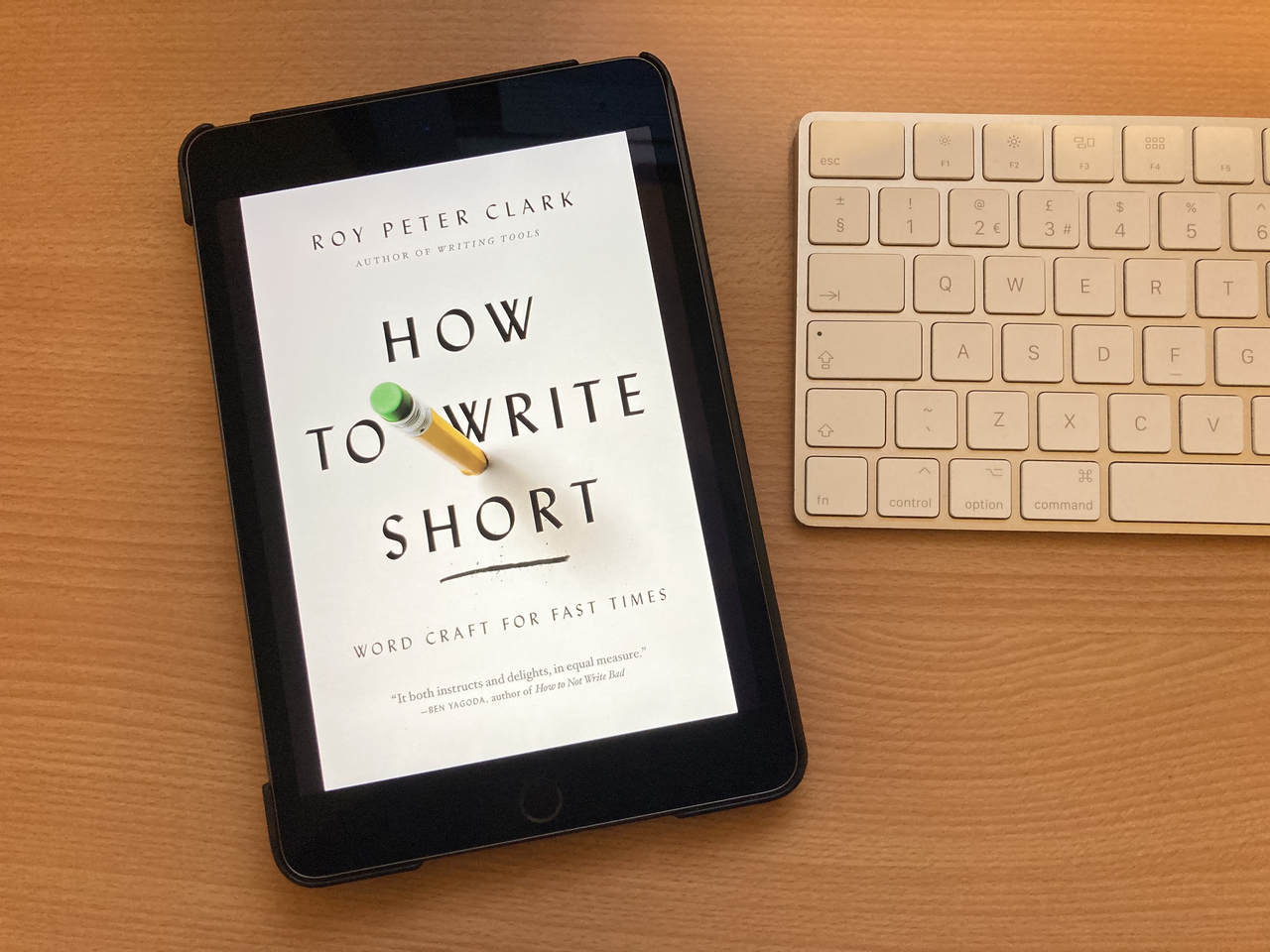
writiing short, writing for business

Imagine it.

You find a Twitter account and it has a very short profile message. It’s just 3 words long.

It rather menacingly says: I’m after you!

This was a genuine Twitter profile from a marketing adviser.

So, what happened?

The profile’s owner intended the message to suggest, that he puts everyone before him. However, it read very differently.

His unsmiling profile photo only added to the likelihood it would be interpreted in the literal sense. That he’s pursuing you. That you are his intended prey.

The person in question is one of my newsletter subscribers. He explained that he was trying to write short, having just read one of my articles. Apparently, it was only after he noticed an increasing number of abusive tweets, which made no sense to him, that he figured out his mistake.

He went on to say that the offending profile message had been live for well over a month, and he’s still suffering the reputational damage. (Screenshots of his original profile have circulated in his local area).

Writing short

Writing short is about impact. From a word-count perspective, this means using as few words as required, but no fewer.

And writing for business in general, requires attention to detail. This includes looking for possible misinterpretations. Especially those that could be embarrassing or, as with this case, embarrassing and highly toxic.

Google: The long and the short of it

By Jim Connolly | November 5, 2021

google indexing, google keyword, google repitition

Hundreds of the posts on Jim’s Marketing Blog have been excluded from Google’s index. Close to a thousand.

I’m told that Google’s algorithm needs me to write longer posts. It also needs me to unnaturally repeat key phrases and key words, over and over. Otherwise, no indexing.

I suggest I don’t need to change how I write.

I suggest Google needs to radically improve its horribly limited search algorithm.

Here’s the thing. I write for people, not a poorly-programmed, easy to fool algorithm. This means I write short whenever I can. This post is 32 words long. That’s all it needed.

Whilst writing short drives Google nuts, people like it.

  • It’s people whose problems I seek to solve.
  • It’s also people who hire me and people who recommend me.

The next time you have to plough through thousands of unnecessary words online, for a couple of hundred words worth of information, you’ll know why the writer did it.

Publish the process: A quick note about notes

By Jim Connolly | November 4, 2021

Jim Connolly notes

Here’s one of those publish the process posts I promised. The photo above is an example of how I take notes at my desk, when using pen and paper. I thought I’d share it today, along with some tips, and a look at how I take notes.

Some notes on note taking

You may notice it’s written in capitals. I do that deliberately. I write extremely fast in cursive, but it can be really hard for me to accurately read what I’ve written afterwards. Writing in capitals slows me a little, which also seems to result in better notes.

Although I used a fountain pen for this note, I use ballpoint pens the majority of the time. Also, when I use ballpoints, I tend to use different pigments in the note. I always have a BIC 4-in-1 (red, green, black, blue) ballpoint pen at my desk and in my bag.

I only write the main points down to begin with. This lets me get the big picture on the page, while it’s still vivid in my memory. And I peg the detail onto the main points afterwards. It works for me.

If you’re wondering, those particular notes were for a blog post. I added the detail to them later, then typed it up into WordPress for the blog.

That notebook was really cheap. I only use cheap notebooks now. I used to invest in expensive, branded notebooks ones, but found zero additional value. I find some people treat their notes like works of art. Not the content of the note. Just the overall design! Many of my best notes were scribbled onto a napkin or a scrap of paper. And some of those scribbles are still perfectly readable, 30 years later!

Almost all the handwritten notes on my client sessions are written into an iPad Pro, using the Apple Notes app. I have my pre-session notes typed up into the app. Then, notes from the session are quickly jotted down onto the same document. I switched to this approach around a year ago. It’s been a huge productivity win.

I’ve found that the key piece of advice regarding note taking, is to find what works best for you, and not to follow every so-called breakthrough in note taking. It’s the value of what you capture that matters. Not the tools. Not the design.

I hope you found something useful there.

  • « Previous Page
  • 1
  • …
  • 3
  • 4
  • 5
  • 6
  • 7
  • …
  • 31
  • Next Page »

FREE marketing tips!

Get my best tips, advice and ideas delivered direct to your inbox, for FREE. Just add your email below.

I respect your privacy.

Jim Connolly

Hi! I'm Jim Connolly and I help small business owners to sell more, using creative ideas, with no marketing budget required. Enjoy!

Featured by

marketing advice, marketing help

Site sponsor

packaging consultancy

Categories

  • Blogging (406)
  • Business development (484)
  • Copywriting (303)
  • Email marketing & mail shots (187)
  • General marketing (1,665)
  • Professional development (538)
  • Social media marketing (355)

Hosting provider

20i hosting

Search

Creative Thinking?

My Creative Thinking Website

Recent posts

  • From? To? January 21, 2026
  • The biggest lie in marketing isn’t what you think it is January 18, 2026
  • Stability through impact January 16, 2026
  • Business success. In six words January 10, 2026
  • How the winning minority of small business owners are planning for 2026 December 30, 2025
  • Gain 2 powerful, unfair advantages over your competitors December 22, 2025
  • How to have zero competition in 2026 December 11, 2025
  • From failure to fortune: The feedback loop you’re missing November 5, 2025
  • Stop losing clients to AI: Here’s how! October 31, 2025
  • A bias for action October 27, 2025
  • Marketing: Smoke and mirrors October 19, 2025
  • Marketing 101: The power of extra October 13, 2025
  • Stop selling. Start inviting! October 8, 2025
  • Before they buy: 3 things your prospects need to hear October 1, 2025
  • You’re better. They’re more successful. Why? September 23, 2025
  • Proof: Your success potential is unlimited September 11, 2025
  • How many is “enough”? September 4, 2025
  • Let your competitors grow YOUR business! August 30, 2025
  • Follow-up: Increase conversion rates up to 80% August 20, 2025
  • This marketing gets opened 100% of the time August 8, 2025
  • Home
  • About
  • Hire me

Copyright © 2026 Jim Connolly