Jim Connolly Marketing

  • Home
  • About
    • About Jim Connolly
    • Jim’s small business marketing newsletter
    • Top Marketing Tips for 2026
    • Privacy Policy
    • How I use cookies
    • Contact
    • Disclosure
  • Let’s Grow Your Business

Business success. In six words

By Jim Connolly | January 10, 2026

marketing, small business, jim connolly

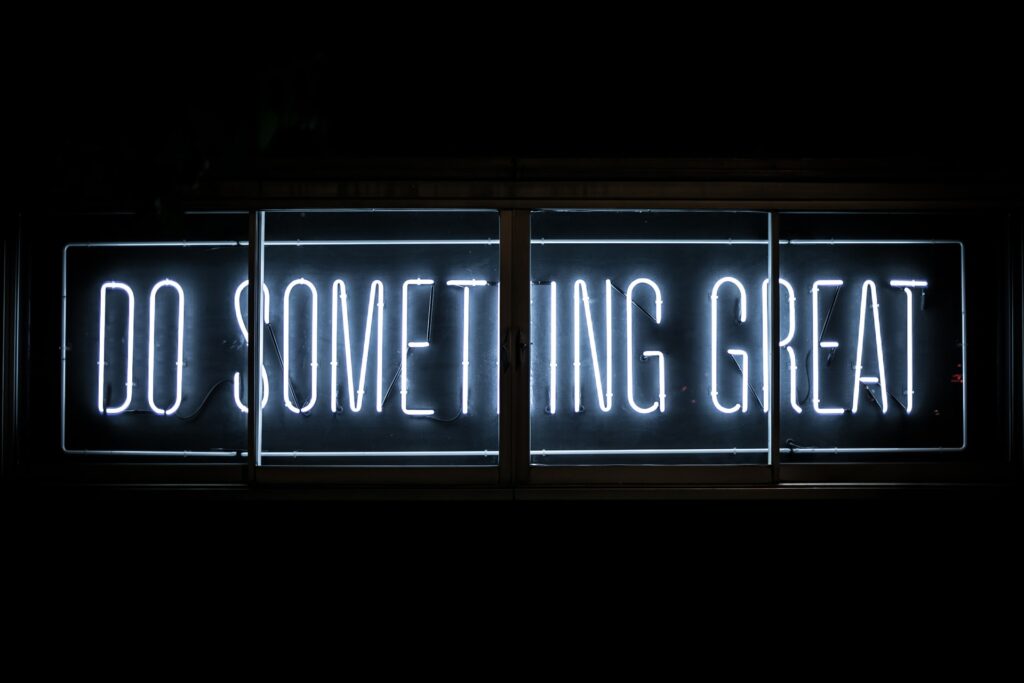
Photo by Clark Tibbs 

It’s simply this: In business the winners get moving.

Here’s why those 6 words are foundational to your success.

  • Every business owner is presented with opportunities to succeed.
  • Every business owner can steal ideas.
  • Every business owner can choose to be a leader.
  • Every business owner can instigate, rather than wait for someone else to move.
  • Every business owner encounters problems.
  • Every business owner can choose to have zero competition.
  • Every business owner can give their business the resources it needs.
  • And every business owner has the same 24-hours available to them every day.

It’s what we do that determines our success.

Not our intentions, our network of business contacts, our cutting edge technology, our plans, our targets, our qualifications, our competitive edge, our ingenuity… or our skills.

Intelligent action always precedes success. That’s why in business, the winners get moving.

Gain 2 powerful, unfair advantages over your competitors

By Jim Connolly | December 22, 2025

small business marketing, advantage, jim connolly

Photo by Alejandro Pérez 

Today, I’m going to give you an unfair advantage over your competitors. Well, two, actually.

I was in my twenties when I started my business. So, I made darn sure to seek out as much advice as possible, from those with lots more experience and a track record of success. That’s when I discovered what I’m about to share with you.

It came from my first accountant, back in the 1990’s. He suggested I work 1-hour a day longer, than the average for my industry. This is what he himself did, and it gave him what he called “a powerful, unfair advantage” over his competitors.

I did as he suggested and the results were amazing.

Grab your unfair advantage

Here’s how it works, in just 3 steps.

  1. I’m an early bird, so I chose to start work an hour earlier than others in my industry. You can equally add your hour to the end of the day, or add 30-minutes to the start of your day and 30-minutes to the end.
  2. I would finish around the same time as them, so I just worked 1-hour more.
  3. The pay-off? Over the period of a working year, this gives you an additional 6 weeks (based on the typical working week). That’s an amazing one and a half months worth of extra, highly-productive time, to produce, create and deliver for your clients or customers.

The positive impact on my results came fast and were easy to measure.

But that’s not all.

You automatically get another unfair advantage

Yes, it genuinely helped me get a lot more done. But it helped in another way, too.

By thinking I was working while my counterparts were not, it provided me with an instant, mental advantage. It made me feel that I was more committed, more motivated and more driven than them. This may not have been true, but the inspiration it gave me, and still gives me today, is absolutely true.

If you’re in a tight spot right now or just want to give your business a sustainable, measurable lift, I strongly recommend you give it a try.

How to have zero competition in 2026

By Jim Connolly | December 11, 2025

no competitors, zero competition, niche marketing

One of the things I work on with many of my clients, is the development of a valuable niche for their business. A highly profitable niche, with literally no competition.

Here’s a quick look at the approach I use, plus some ideas you can adapt into your own business.

The niche model I use is based on the strategy I developed for my own business. Here are just 3 of over 70 processes I’ve developed.

Enriching my competitors

Instead of focusing on crushing the competition, I focused on enriching the competition. When I started my business in 1995, my strategies were so different from the other providers in my industry, they were no longer competitors. This gave me the freedom to enrich, connect and promote their marketing businesses. That remains to this day.

The following is from a previous article I wrote on this subject – the full article is here.

“I chose to proactively seek out opportunities to help my competitors flourish, to open doors for them, to share new ideas and strategies I’d developed with them, to connect them with useful people, etc. I was in my twenties at the time and many in the industry said I was young and naive. I saw things very differently…”

Tip: If you found that interesting, I strongly recommend you read the full article.

Closing sales replaced by opening relationships

Instead of focusing on closing sales, I focused on opening relationships. It has always struck me as odd that good salespeople are referred to as good closers. So, I decided to focus on opening instead of closing.

Opening relationships, to be precise.

Whilst sales closers have a toolkit of psychological closing techniques, I didn’t. Instead of seeing the sales process as a game of chess, pitting me against the prospect, I wanted to be on the same side of the table as the prospect. In their corner. Looking out for their best interests, exactly as I would if they were already my client. This transforms initial meetings with a prospective client. It switches things 180 degrees, from the usual chess game.

Yes, it does mean being willing to openly, honestly tell a prospective client if you don’t think you can help. When this happens, you’ve still planted some amazingly positive seeds.

You’ve just demonstrated to a prospective client that you can be trusted. You’ve also demonstrated that you offer an exceptionally professional service. In my experience, these same prospective clients often go on to become regular sources of high-quality referrals.

This approach has set me apart and allowed me to further develop my reputation as a trusted adviser. That’s because it’s in such stark contrast to the usual strategy, of closing tricks and needy follow-up emails.

Building an influential network, not a big network

People in the marketing industry are known for the size of their networks. They’re at every networking event. They’re amongst the most active people on Linkedin. I took a very different approach. Instead of focusing on growing a large contact network, I focused on growing a small, but influential network.

Even when I was starting out, I never saw the value of what’s usually thought of as ‘networking’. For example, I think I had my last lot of business cards printed around 2002.

Oh, and I’ve never had a Linkedin account or had any need for one.

Why?

Business is all about people and the depth of the relationships you have with them. I chose to intentionally develop strong, meaningful relationships with people who I believed to be the best fit.

Initially my main focus was senior media people, marketing experts and mentors. I was 29 when I started my business, no one knew who I was and I needed to be around people who were able to help me get known and develop. If you followed the link I shared earlier, you’ll have seen how my first 6-months in business went.

As with every person I have shared this selective networking approach with, I too have found that you automatically get many of the benefits of a large network. Such as massively expanding the reach of your work, your opinions and your ideas.

For example, you’ll find that from time to time, your influential contacts recommend you and your work to their audience. An audience that respects their endorsement. Another example is media coverage, something I have professionally benefited from enormously. Lots of journalists have known me for years. They trust me and are comfortable enough to contact me, and cite me, when they need expert opinion.

Tip: One way to get started is to think who would be really useful for you to know in 12-months or 18-months time. And today, start to look for ways to earn their attention and then their interest. It’s not by cold emailing them or pestering them. It’s about being useful to them. Gently. Over time.

I hope that quick look at 3 of the 70+ processes I’ve developed, has encouraged you to seriously consider a more niche approach to the growth of your business in 2026.

Ultimately, you can choose to compete against the masses or develop your own, wonderful niche. You can choose to blend in or stand out. You can choose to be ‘yet another’ or uniquely you. It’s always a choice. And a really easy one, if you think it through.

From failure to fortune: The feedback loop you’re missing

By Jim Connolly | November 5, 2025

Photo by Ross Findon

With 2026 less than 2-months away, I’d like to help you overcome one of the biggest barriers to business success. If you do, you’ll set yourself up for an amazing 2026 and beyond.

Ready?

Then lets go my friend.

It starts with one of the biggest paradoxes in business. The only way to succeed more often, is to increase your failure rate. (I’ll give you 3 examples of why this is provably correct in a moment).

The challenge here, is that many small business owners have not yet figured this out. They avoid taking action on their ideas, unless they are convinced, in advance, the idea will work out exactly how they want it to. As I’m sure you know, success seldom happens like that. So, their ideas are discarded. Including the ideas that would have made them a fortune.

Here’s how we overcome that loop and increase our success rate dramatically.

The failure success reality

When we can see something that clearly makes logical sense, our minds find it very easy to accept. Here are the 3 logical outcomes from taking action on a business idea we have. And we can benefit massively from all 3 of them.

  1. It might work out just how we wanted. A quick win. An instant hit. 
  2. It might work later, after we make some adjustments. By putting an idea into action, we attract feedback. Feedback allows us to tweak and improve. And improvements in what we do directly lead to improved results.
  3. It might flop. If it does, we get to learn from it. This learning can then be invested in the next business idea. Every big success in my business and my life, came this way. These failure lessons help us build an invaluable reservoir of feedback. Feedback that leads to better and better decision-making. This is how all ongoing success happens.

When we fully understand the value of feedback, it becomes a lot easier to put our ideas into action. That’s because we will have eliminated our irrational fear of failure. Just like every successful business owner before us. 

Failure is feedback.

And feedback is our friend. 

Stop losing clients to AI: Here’s how!

By Jim Connolly | October 31, 2025

risk taking, risky thinking

Photo: Matt Reiter

A rapidly increasing number of readers are emailing me, worried about the impact AI is having on their business, or the impact it will have.

Let’s see if I can help you turn this into an opportunity to grow your business. Or at least, eliminate/greatly reduce any negative impact on you.

I need to start by showing you how not to respond.

Don’t carry on as you are, relying on explaining to prospects that your work is better than AI. Annoyingly, that answer is correct. But it will fail the majority of the time. For at least 2 reasons.

  1. AI completes tasks in minutes and costs maybe 5% of a service provider’s fees. That 95% saving is extremely compelling.
  2. Most people are not experts in the services they buy from providers. They’d struggle to see the current flaws in AI’s output or even know when AI is screwing up.

How to win today and for years to come

My first idea should work extremely well for at least another 5-years. Then carry on working, albeit to a lesser degree, for another 5-years or more. 

I want you to consider creating a version of your service, which is aimed at a specific group. I’m referring to people who are the least likely to want to use AI, and the most likely to value a human connection. Who? People aged 50 or over. Better still, those aged 60 or over. 

Why?

Since the boom in AI use started, we’ve seen that the least engaged users are those over 50. And it drops considerably the higher the age is. A Pew Research Center survey published in June 2025 showed that the majority of people in the US aged 50 or over, use AI infrequently or not at all. That AI usage then drops considerably for those 65 or over. Note: The Pew data is based on ChatGPT usage as it’s the most commonly used AI in the US.

By marketing a version of your services, which speaks directly to those who are not looking for an AI alternative, you are:

  • Putting the minds at rest, of all those people who long for a traditional service provider
  • Providing your business with a very profitable niche market to serve

As AI becomes better, and daily users of AI get older, the door of this opportunity will slowly close.

However, by then, those service providers who benefit now, while the market is fertile, will have the time and money to adapt to whatever happens next.

Here’s another idea.

Change the playing field, so it’s easy for you to win

Here’s what we know: AI wins against small businesses, whose business model is based on charging for tasks that are automatable via AI. Not tasks that are well-automated by AI. Just automated.

The answer? Pick a strategy for your business, where you’re selling what AI can’t automate.

The word strategy is usually misused. For the best understanding of what a strategy is, I always refer people to the amazing Professor Roger Martin’s definition.

“Strategy is an integrated set of choices that positions you on a playing field of your choice, in a way that you can win.” 

Picking your playing field

Here’s an example.

AI can write a resumé. It can prompt us for the details it needs, then quickly provide us with a resumé. If we notice any errors, it will strive to correct them. Boom. A resumé is created. 

A playing field for a resumé writer to win on, would be based on some of the limitations and weaknesses of AI’s automation. 

Here’s just one massive AI weakness.

Who pays for a professional resumé? Someone who wants to land a great job in a certain industry. And if they go to a resumé writer who specialises in that industry, they’ll get high-value, effective benefits. Specialist resumé writers not only know exactly what type of resumé is working best right now, they’ll also be deeply aware of what’s happening in that industry. Not based on the news or anything published online (which AI can access). But from their vast network of industry contacts. This can equip the resumé writer with advanced knowledge of openings at the type of companies or organisations, which their clients are interested in. They may even know the key attributes their client’s industry is most interested in hiring for right now.

So, if I’m a resumé writer, I’ll choose to focus on those AI weaknesses. Things AI can’t automate, which humans are fantastic at. This becomes the central thrust of my marketing.

In short

Stop telling people you’re better in your field than AI is. They lack expert knowledge of what someone in your industry does, so they have no idea if AI is creating a pile of junk.

Instead: Pick a playing field that AI can’t touch, but YOU can easily win on. That’s a position you can market very successfully from for the foreseeable future.

If AI services are negatively impacting your business, or if you can see it becoming a problem, consider one, or both of those ideas.

A bias for action

By Jim Connolly | October 27, 2025

bias for action, what bias for action means

Photo: Shutterstock.

One of the big business mantras out there today, is that it’s smart to have “a bias for action”.

That’s not only wrong. It’s dangerously wrong.

Why a bias for action is dangerous

On a surface level, the advice seems to make sense. It sounds positive after all. However, if you think about it for a few minutes you’ll spot the obvious error. You’ll notice that many of the most ineffective people you’ve ever met had a bias for action.

These include.

  • The people who embody the ready, fire, aim mindset
  • The people who enthusiastically climb a ladder that’s against the wrong wall
  • The people who jump from project to project, because they’re action focused and get bored fast
  • The people who keep themselves busy doing what’s comfortable, rather than what’s effective

A bias for action can work directly against us. Unless we first develop a bias for highly productive activity. Then it pays off in a VERY BIG way! 

This means using our time and energy as effectively as we possibly can. These are fast-changing times. That’s for sure. So, we need to be at our productive best. We need to get strategic and very specific about exactly what we want to achieve.

It looks like this.

  • Do the research
  • Get the advice
  • Look at the numbers, with close attention to the medium and long-term

And if everything stacks up, take action. That’s when a bias for action is needed and richy rewarded.

This means planning first, then acting. Using your time and energy as effectively as you possibly can.

These are challenging times and we all need to be at our productive best. So get specific about exactly what you want to achieve. Do the research. Get the advice. Look at the numbers. And if everything stacks up, take action. That’s when a bias for action is needed.

  • « Previous Page
  • 1
  • …
  • 3
  • 4
  • 5
  • 6
  • 7
  • …
  • 91
  • Next Page »

Creative Marketing Tips

Get my best ideas delivered direct to your inbox. Just add your email below.

You can unsubscribe at any time. I respect your privacy.

Jim Connolly

Hi! I'm Jim Connolly and I use creative marketing to help small business owners increase sales, boost profits and build amazing businesses. Read more here.

Featured by

marketing advice, marketing help

Categories

  • AI (6)
  • Blogging (407)
  • Business development (493)
  • Copywriting (307)
  • Creative Marketing (1,667)
  • Email marketing & mail shots (187)
  • Professional development (545)
  • Social media marketing (358)

Hosting provider

20i hosting

Search

Recent posts

  • Get creative: Let others market your business for free! August 7, 2026
  • Traditional marketing is dead July 27, 2026
  • The stupid game July 13, 2026
  • Hey! Not so fast! July 6, 2026
  • How to get your fees right June 23, 2026
  • A 3 shot espresso for your business June 17, 2026
  • Unproductive? You’re probably just bored June 12, 2026
  • Make AI grow your business June 8, 2026
  • It motivates people to take action, now June 4, 2026
  • Is your business one of the 50% that prospects now avoid? Probably! May 30, 2026
  • Give your best ideas away for free. Here’s why May 12, 2026
  • AI is wiping out your competitors. Now take their market share May 5, 2026
  • Powerful words for your marketing toolbox. Part 2 April 29, 2026
  • Your social media is sending an important message April 27, 2026
  • When was the last time? April 23, 2026
  • Jim, why are my sales numbers down? April 20, 2026
  • The secret sauce you were looking for, is here April 15, 2026
  • A few things worth learning, from the top small businesses April 9, 2026
  • Be optimistic. Because all this is true April 2, 2026
  • Why your audience isn’t growing in 2026 March 27, 2026

Creative Thinking?

My Creative Thinking Website
  • Home
  • About
  • Let’s Grow Your Business

Copyright © 2026 Jim Connolly